Meet the Ensemble
-
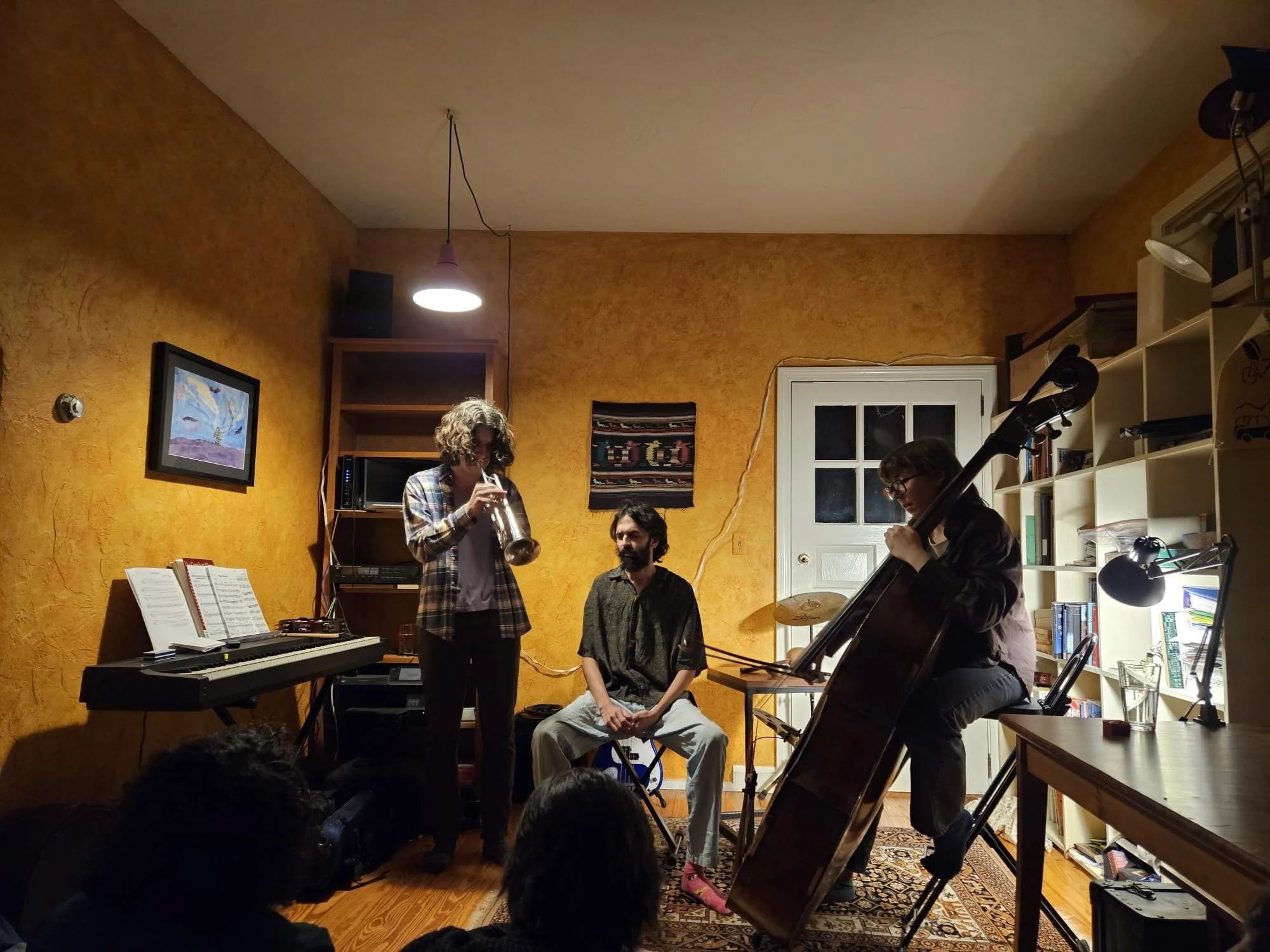
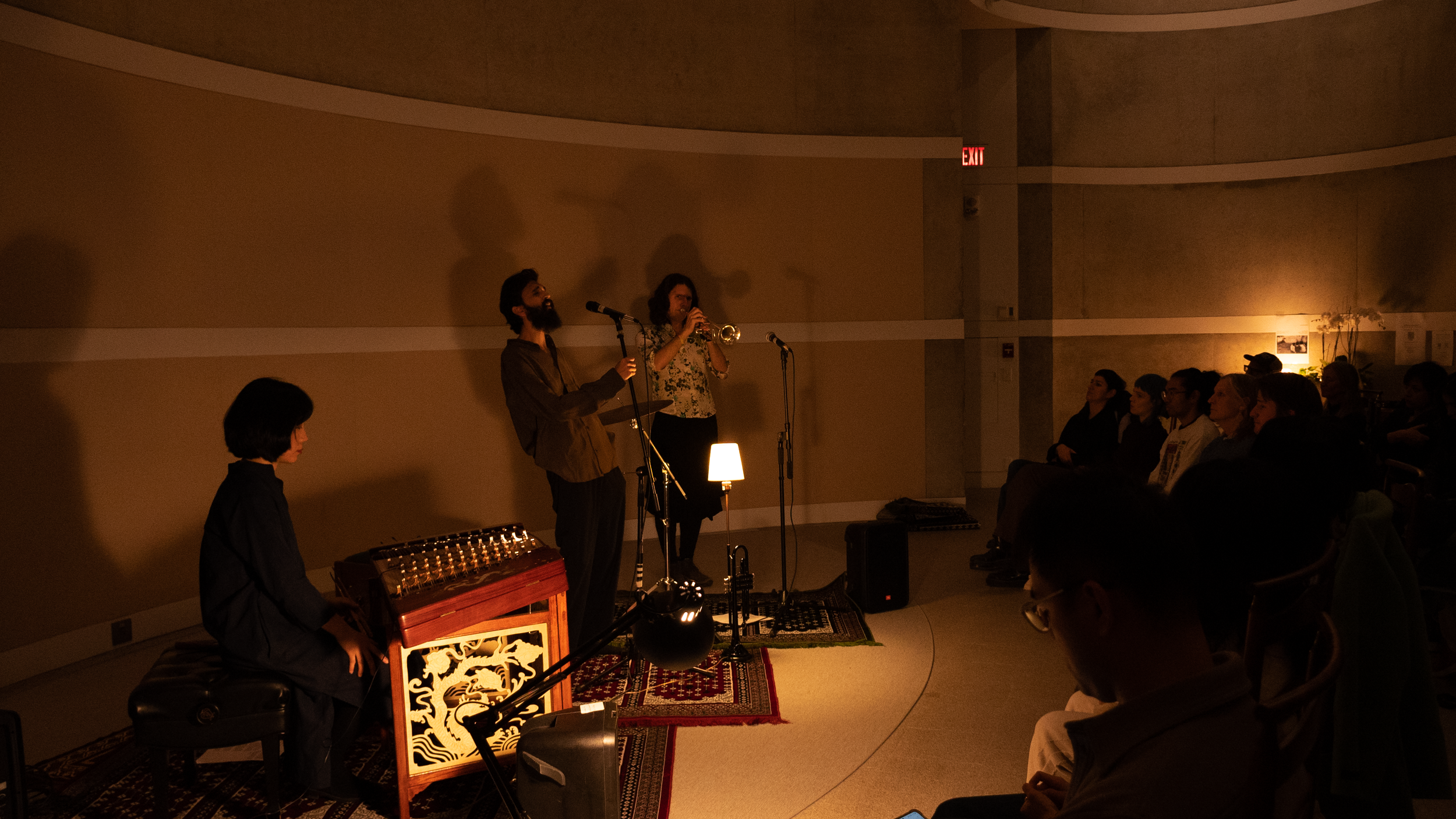
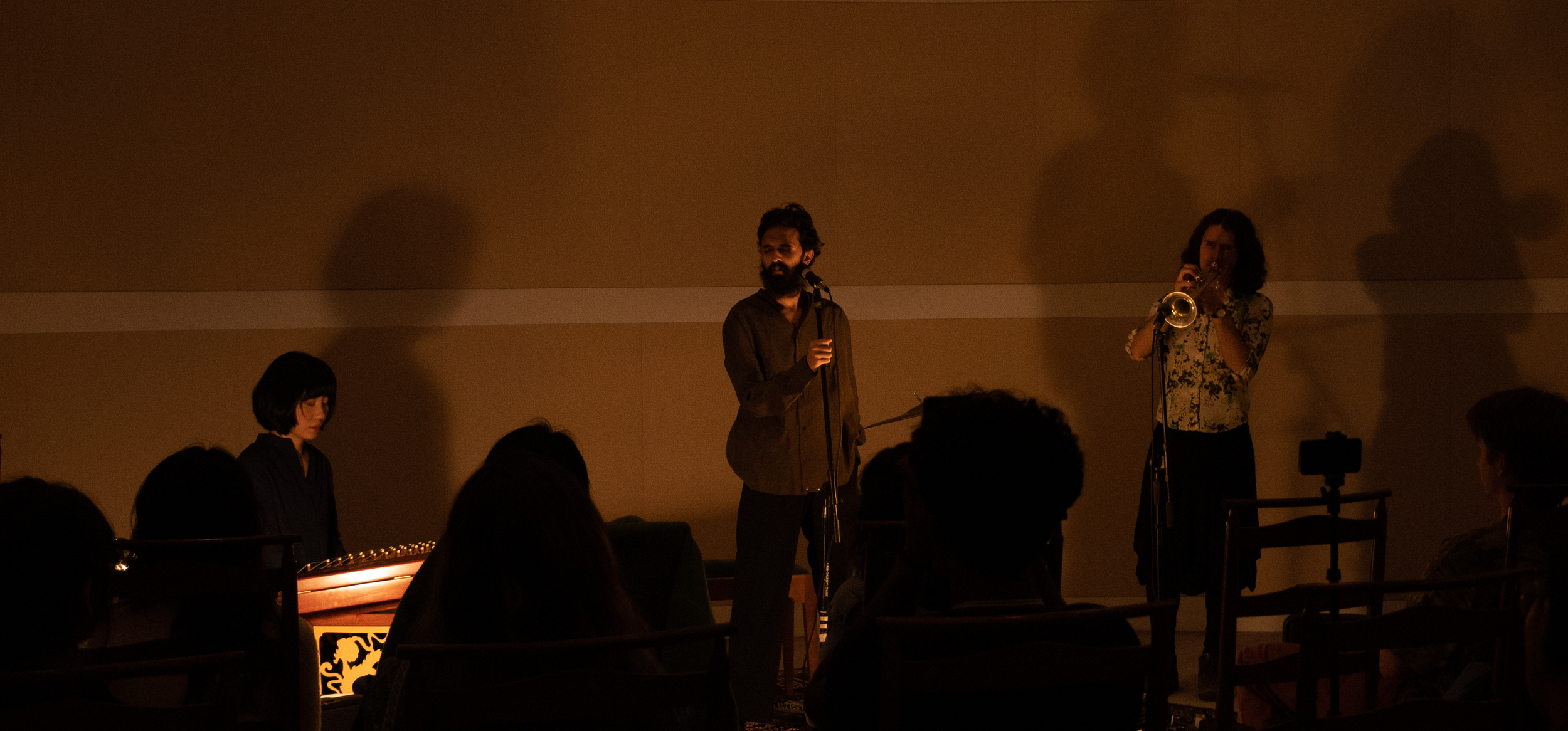
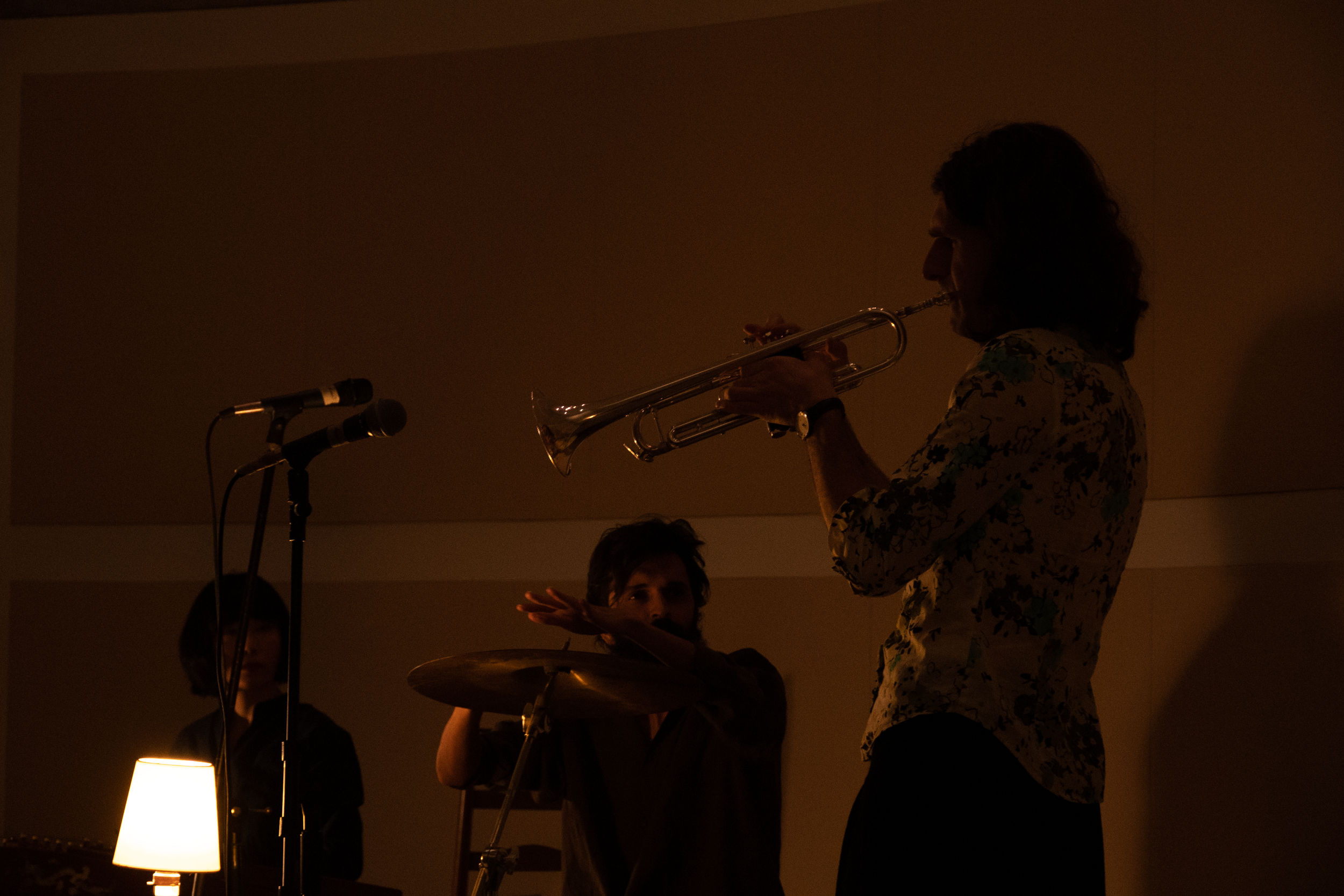
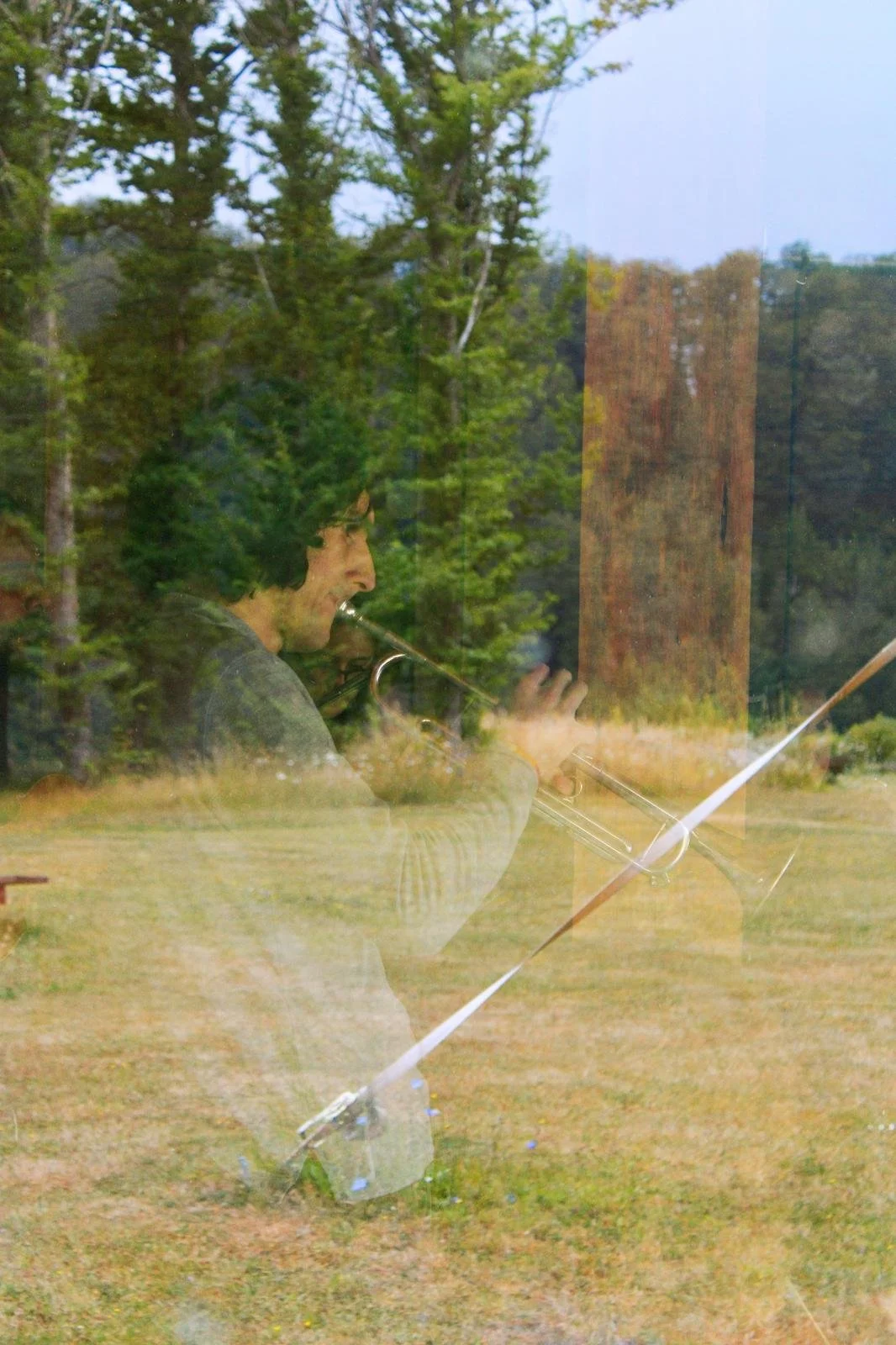
Ezra Rudel is a trumpet player and composer from Cambridge, MA, USA, inspired by friends and folk traditions from around the world. They are obsessed with the relationship between music and language and strive to imitate the rawness and honesty of the human voice through their trumpet playing. In addition to holding a Bachelor’s of Music in Jazz Composition from Oberlin Conservatory, Ezra has trained in New Orleans brass band music, other styles of Black American Music, klezmer, Balkan, Turkish, and Arabic music. They are currently travelling the world, attending residencies such as Silkroad’s Global Musician Workshop and JMI’s Ethno Global Music Gatherings, performing with ensembles like the Trespassers Collective and Lenny’s Funk Club, and striving to learn from everyone they meet.
-
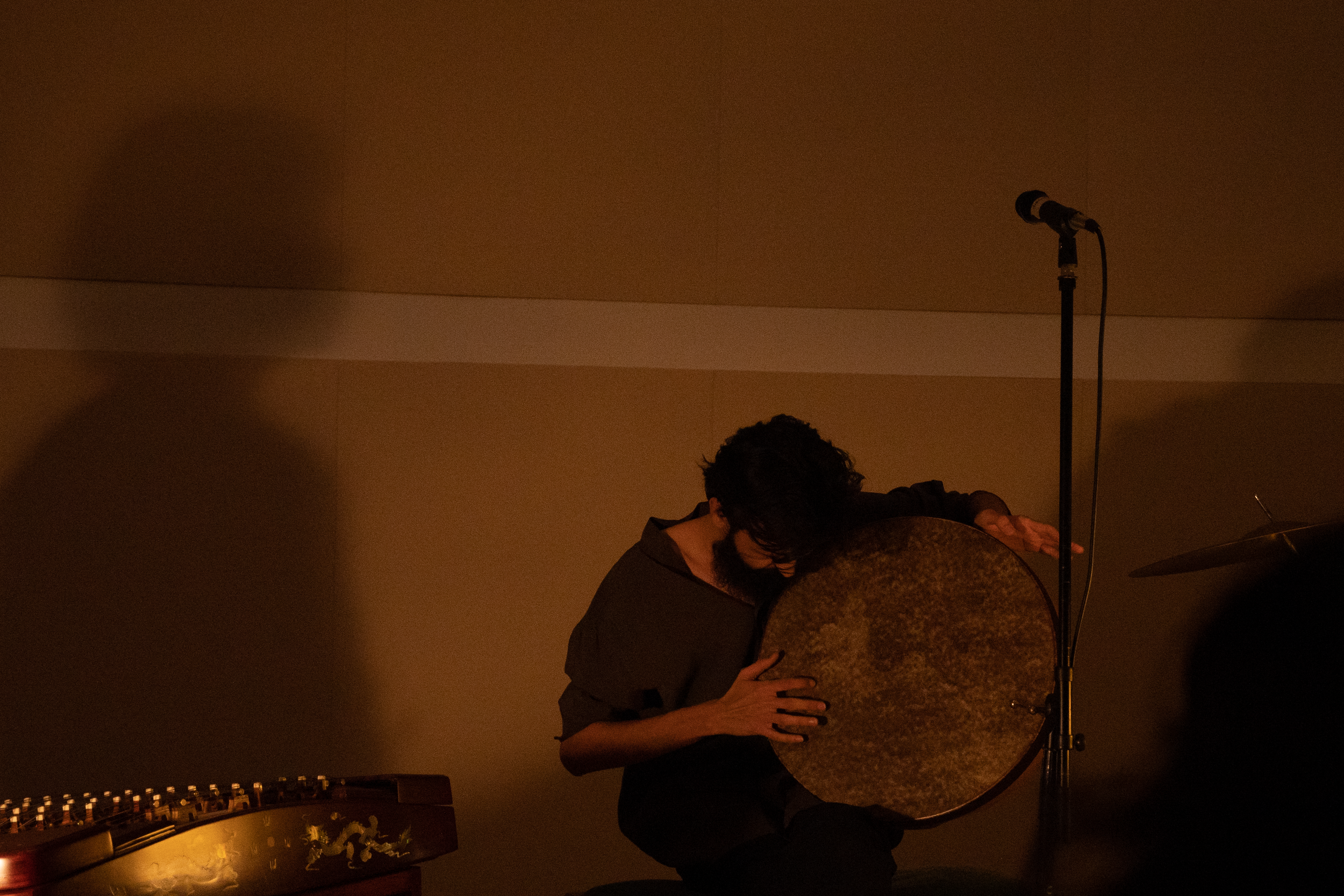
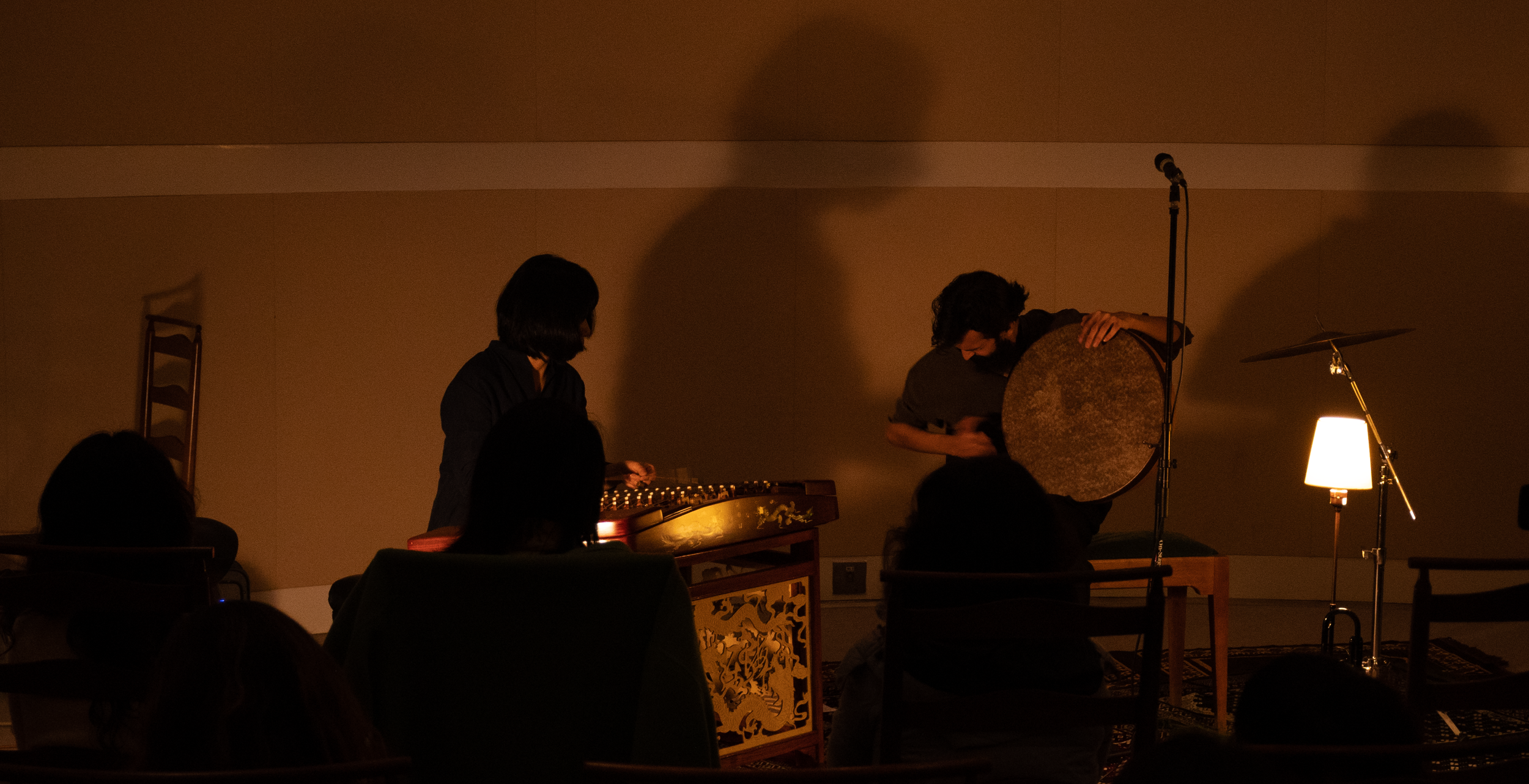
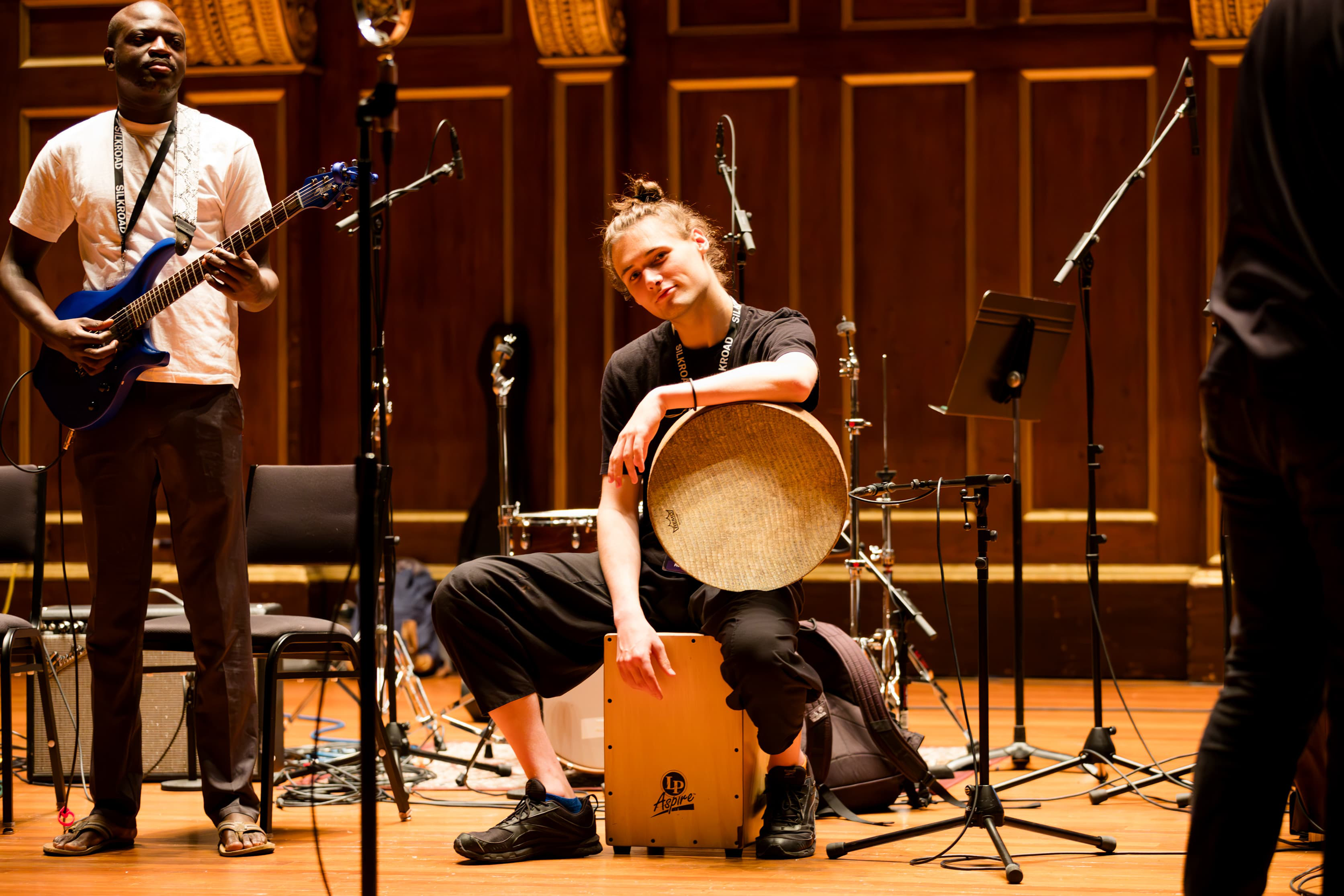
Malik Schilling is a hand percussionist whose music moves fluidly across borders - geographical, cultural, and sonic. Having performed at festivals such as the Morgenland Festival Osnabrück, Yiddish Summer Weimar, KlezKanada, and the Gnaoua & World Music Festival Essaouira, his work reflects a lifelong engagement with musical traditions from West and Central Asia, Eastern Europe, and North Africa. He has collaborated and shared the stage with artists including Manfred Leuchter, Sanaz Zaresani, Mohamed Najem, Mehrnam Rastegari, Muaz Ceyhan, Naci Oğuz, Salman Gambarov, and members of the Berklee and New England Conservatory communities, performing in cities such as Boston, New York, İstanbul, Baku, and Cambridge (MA).
In his performances - from intimate improvisations with his ensemble Pyramid Quartet to large-scale intercultural projects like the Caravan Orchestra and the YAM Ensemble - rhythmic vocabularies of folk traditions meet the open, exploratory spirit of contemporary improvised music. Each concert becomes a space for collective creation, where structure and spontaneity intertwine and new forms emerge through listening and interaction. Fascinated by texture, pulse, and the physicality of sound, Malik brings a vivid sense of presence to the stage - inviting audiences into an evolving dialogue between tradition and innovation, intimacy and intensity.
-
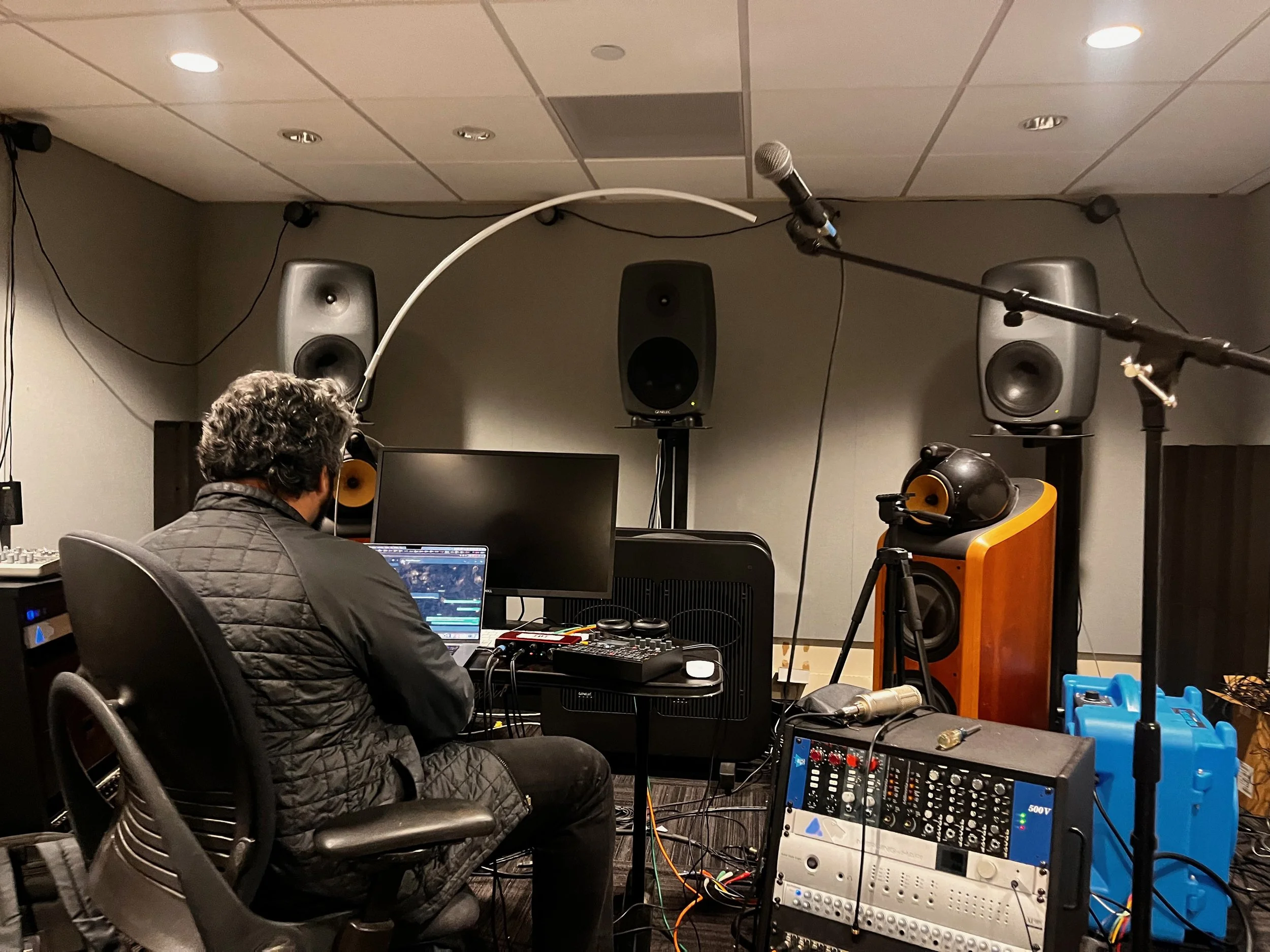
Manaswi Mishra is a PhD student in the Opera of the Future research group, at the MIT Media Lab, under the mentorship of Tod Machover. His research explores strategies for a new creative age of composing, performing, and learning music using A.I. centered around bespoke human intent. Manaswi’s research on creating novel A.I. Lutherie can be seen in the development and performance of Operas like VALIS (2023), FLOW Symphony (2024, premiered in Seoul Arts Center) and exhibitions across the world (IFA Stuttgart ‘24, Boston tech poetics, Algorave India, Ljubljana Biennale 2025 etc.).
His work on AI music performance and copyright law has been published and exhibited in the MIT Press, Harvard Tech Review, Washington Post, Boston Globe, Quantum Knowledge Spring Symposium at FHNW Academy of Art and Design in Basel, Conferences of Computational Creativity, ISEA Brisbane, CVPR 2024, Copyright Society 2023, Bloomberg Law etc. He also holds an MS in Media Arts and Sciences (MIT, 2021), MS in music technology (UPF, Barcelona) and a BTech (IITM, India). He is the founding instigator of the Music Tech Community in India organizing curricula, workshops, hackathons, conferences and community events across India.

-
Pravah Khandekar is vocalist, composer and percussionist, originally trained in the lineage of Dhrupad and Hindustani Music. His work engages closely with contemporary jazz and Middle Eastern styles, and he extensively collaborates with artists from the SilkRoad Ensemble, Berklee College of Music and New England Conservatory. Pravah’s mother is his first Guru, following which he was initiated in Dagar-Vaani Dhrupad by late Rahim Fahimuddin Dagar. He grew up in the mentorship of Vidushi Veena Sahasrabuddhe, Vidushi Ashwini Bhide and Shruti Sadolikar Katkar. Dhrupad continues to inform his practice, and is presently mentored by Pandit Uday Bhawalkar.
Pravah holds a Bachelor of Architecture from Sir JJ School of Art, Bombay, India, and a Master’s in Design Studies from the Graduate School of Design at Harvard University.
His work is curated at international venues and exhibitions such as Malta Art Biennale, Carpenter Center for the Visual Arts (Cambridge, USA), International Film Festival (Calcutta), Short Encounters Film Festival (Greece), Prithvi Theater (Bombay), MIT Media Lab, and New England Conservatory (Boston).
-
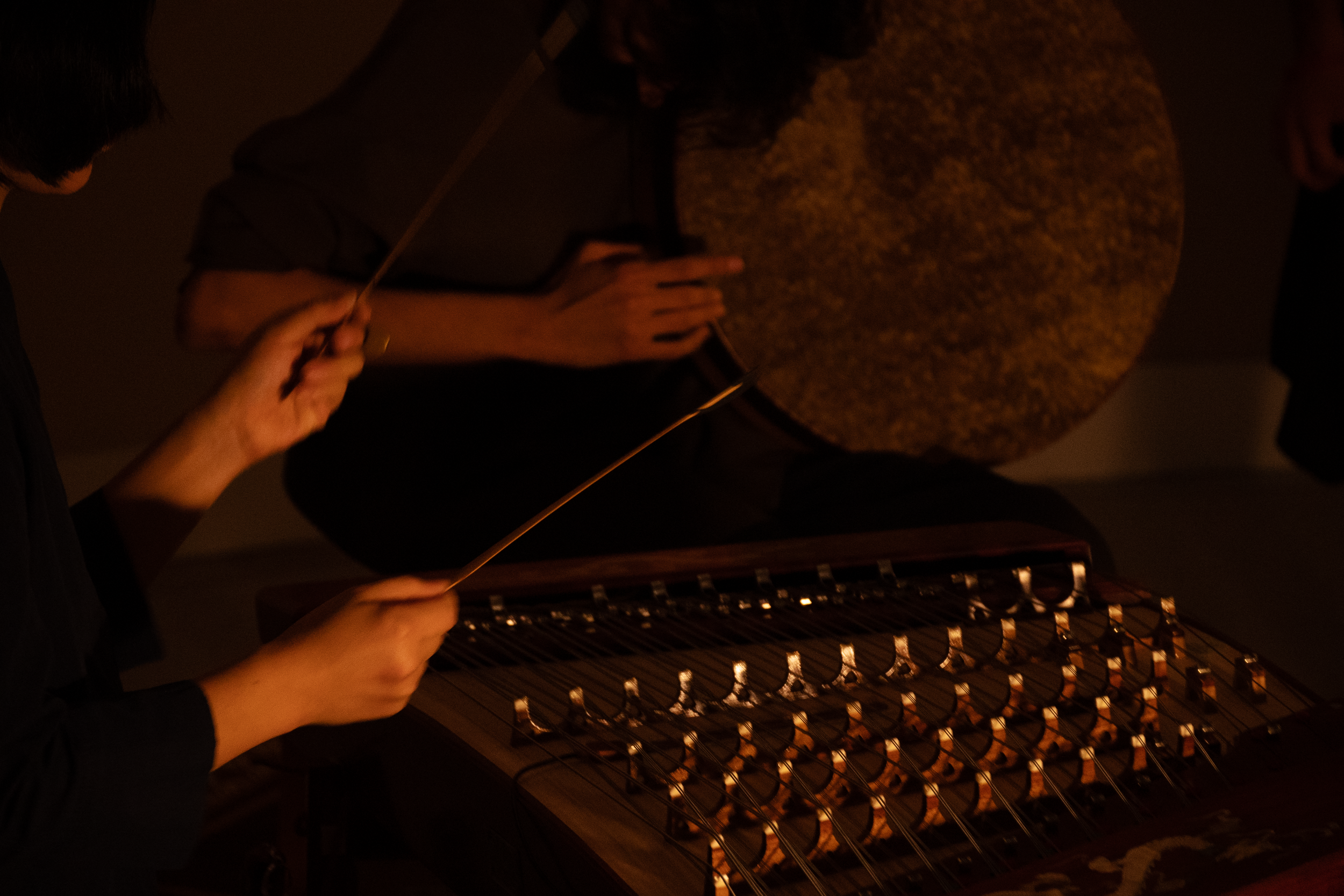
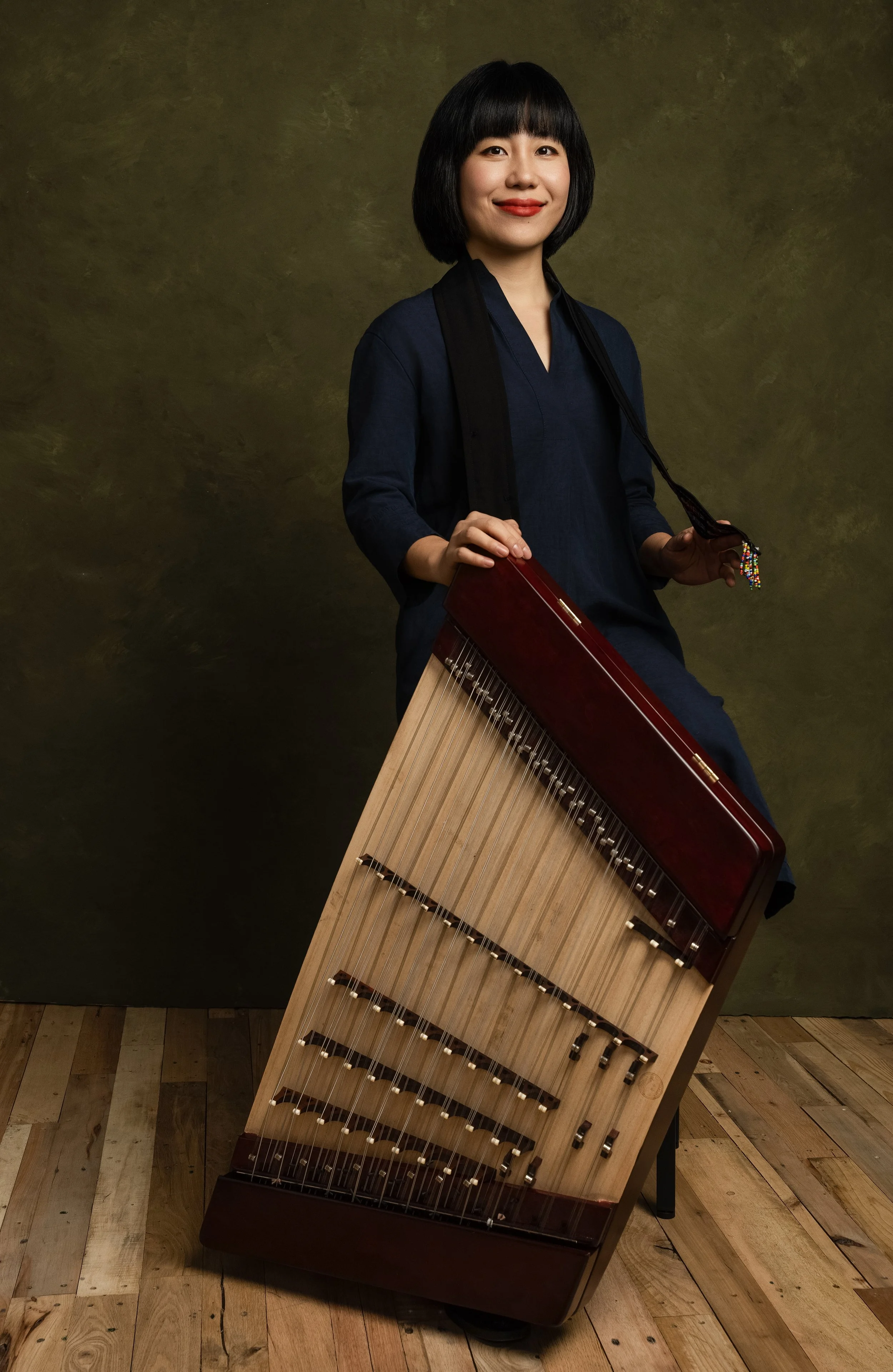
Chao Tian is a boundary-breaking Chinese dulcimer artist, improviser, and sonic thinker whose music unfolds across tradition, experimentation, and diasporic imagination. Trained in the classical lineage of the Chinese dulcimer since the age of five, she now bends that legacy into new shapes—treating the instrument not as a symbol, but as a living, questioning voice.
Her creative work draws from intercultural collaboration and critical listening, engaging with sound as both form and encounter. She is the founder of Unheard Sounds, an ongoing initiative that explores how immigrant artists reshape artistic language through tension, resonance, and reinvention. Her signature project, From China to Appalachia, created with two-time GRAMMY winners Cathy Fink & Marcy Marxer, reimagines the meeting point between Chinese and American folk traditions through dialogue and shared musical roots. She also leads the cross-genre ensemble Always Folk and co-creates Dong Xi (East–West) with world percussionist Tom Teasley.
A former member of China’s renowned 12 Girls Band, Chao has performed across more than 30 countries. Her U.S. journey began as the first Chinese artist-in-residence at Strathmore Music Center (2017–2018), where she initiated bold collaborations across genres. She has since been a fellow at Art Omi, a NextLOOK artist at the University of Maryland, aMusician Changemaker Accelerator fellow (2024), and a GRAMMY U mentor (2025)
-
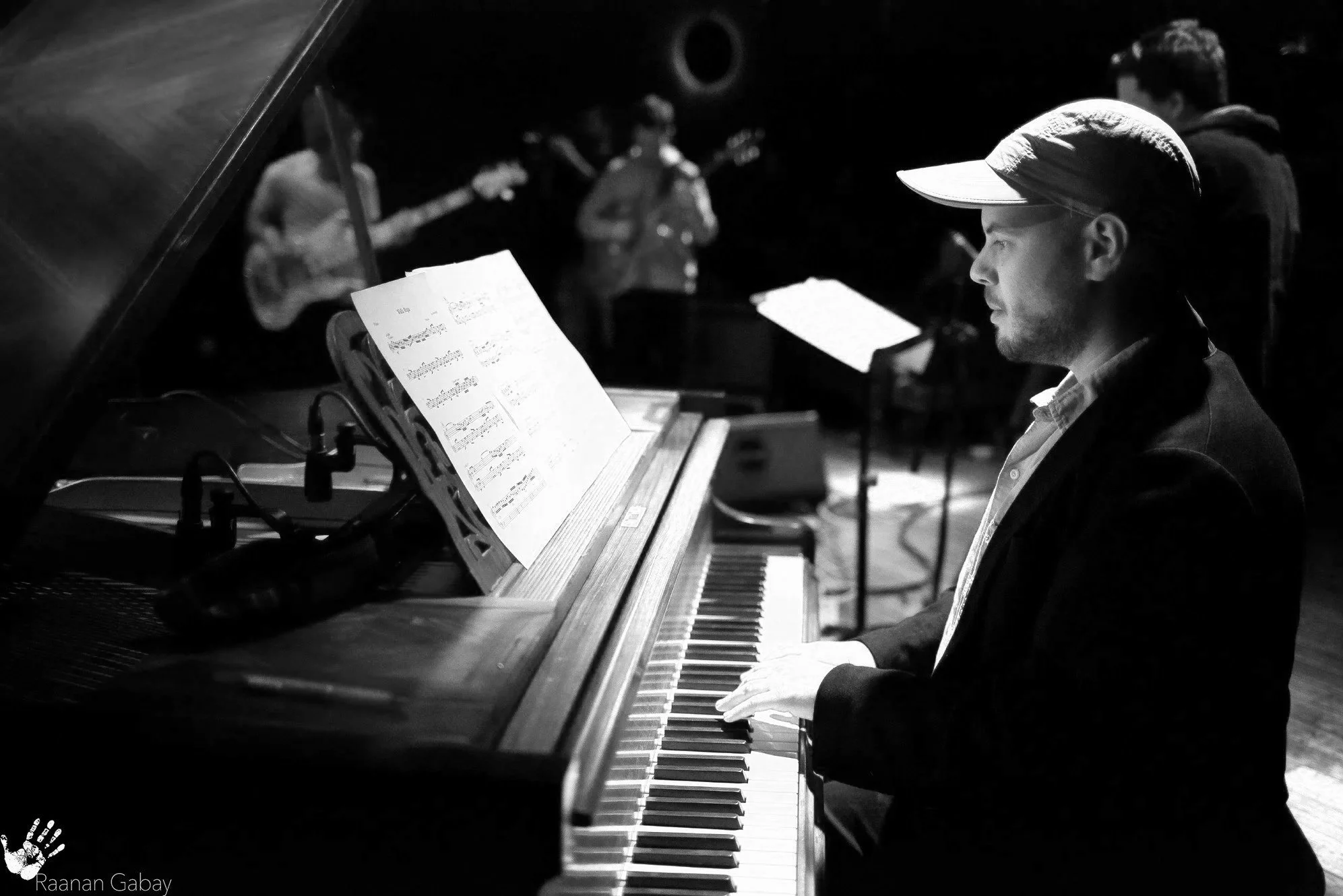
GRAMMY®️-nominated Interdisciplinary composer, pianist, bandleader, and educator. With over 1 million streams on Spotify, music from his debut album "Opus 1" has been featured in Netflix productions, and his solo piano album "SEED" was praised by the Japanese magazine "JAZZ LIFE" and the French magazine "Djolo." His compositions express a unique dialect by blending Western classical music, Middle Eastern music, and Jazz influences.
Yotam graduated from the prestigious Berklee College of Music, earning a composition degree with a full scholarship. He collaborated with renowned and Grammy-winning artists such as Zakir Hussain, Michael League and Bill Laurance of Snarky Puppy, Adam Baldych, Berklee Indian Ensemble, Shankar Mahadevan, and Jamey Haddad. Yotam has also been active in classical composition and is a three-time finalist of the International Antonín Dvořák Composition Competition in Prague, the Czech Republic.
-
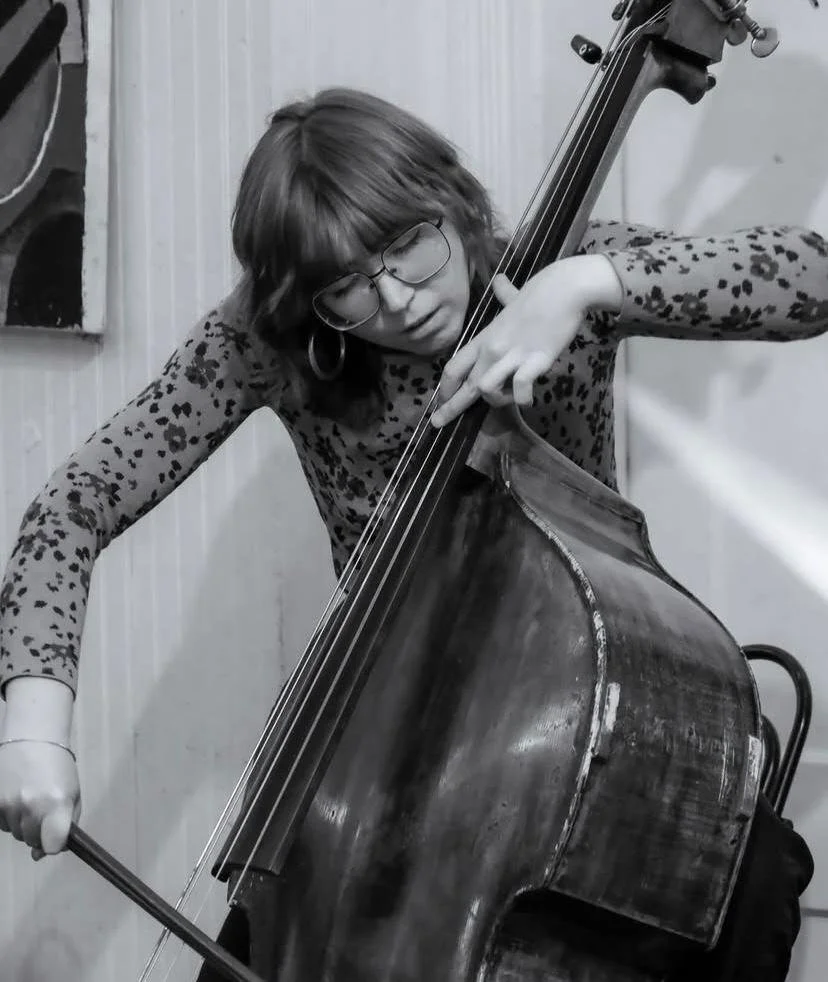
Beth Ann Jones is an American contrabassist and improviser based in the Boston area. Her work spans composed contemporary music and free improvisation, and she performs in a wide range of formats including solo recitals, chamber ensembles, and collaborative improvising groups. She studied Contemporary Musical Arts at the New England Conservatory, where she worked with notable improvisers and bassists such as Joe Morris and Cecil McBee.
Jones is active across the New York and New England experimental music circuits, frequently appearing in projects that explore deep listening, collective improvisation, and unconventional ensemble structures such as bass quartets and contrabass duos.
As a performer, her approach emphasizes responsive improvisation and textural exploration of the double bass. She has appeared on recordings such as Abstract Forest (2025), a collaborative trio album with guitarist Joe Morris and cellist Brad Barrett, which highlights her sculptural and propulsive bass playing within a free-improvisational context.
Her practice situates the double bass within contemporary experimental music, bridging jazz improvisation, avant-garde composition, and interdisciplinary performance.