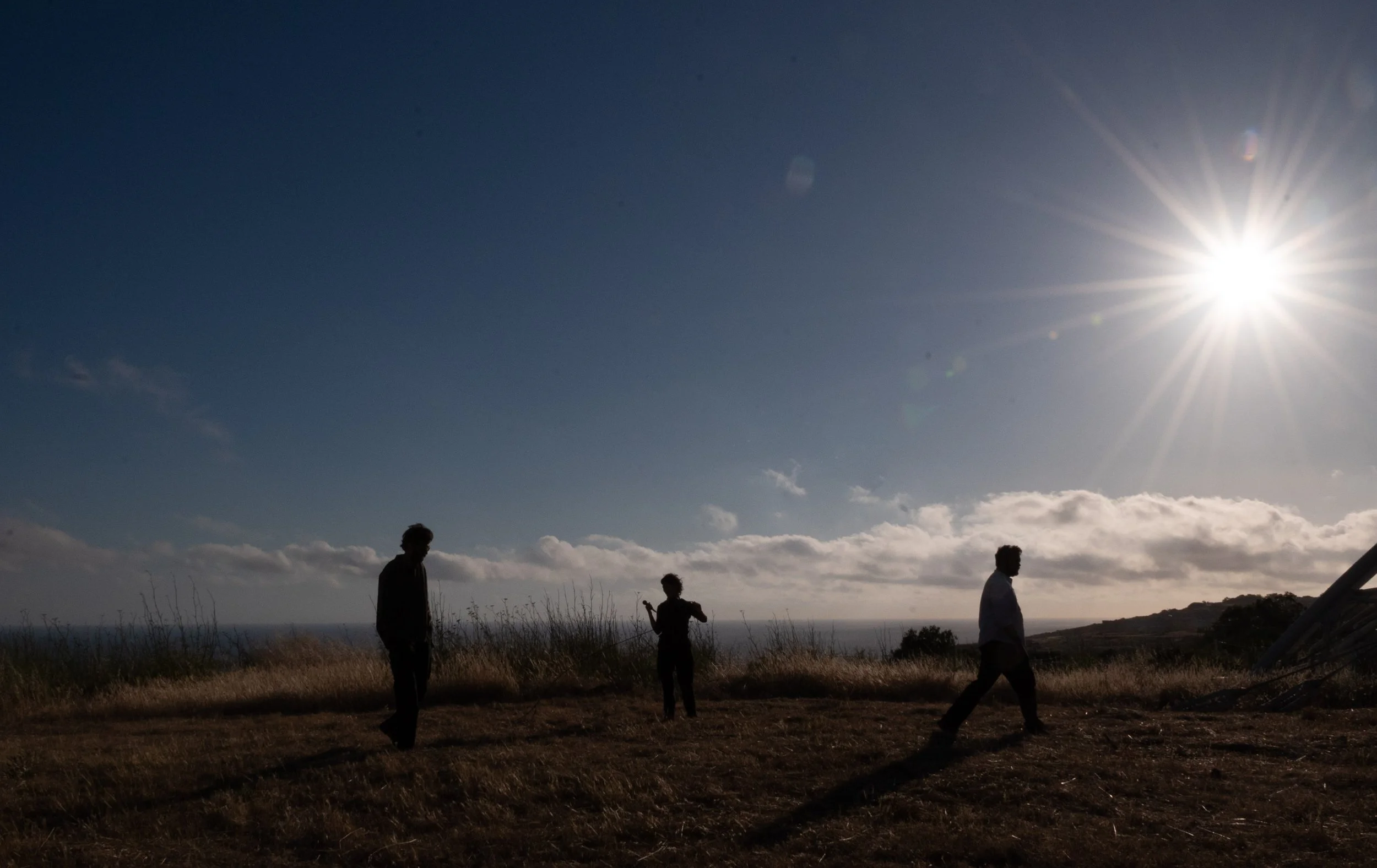
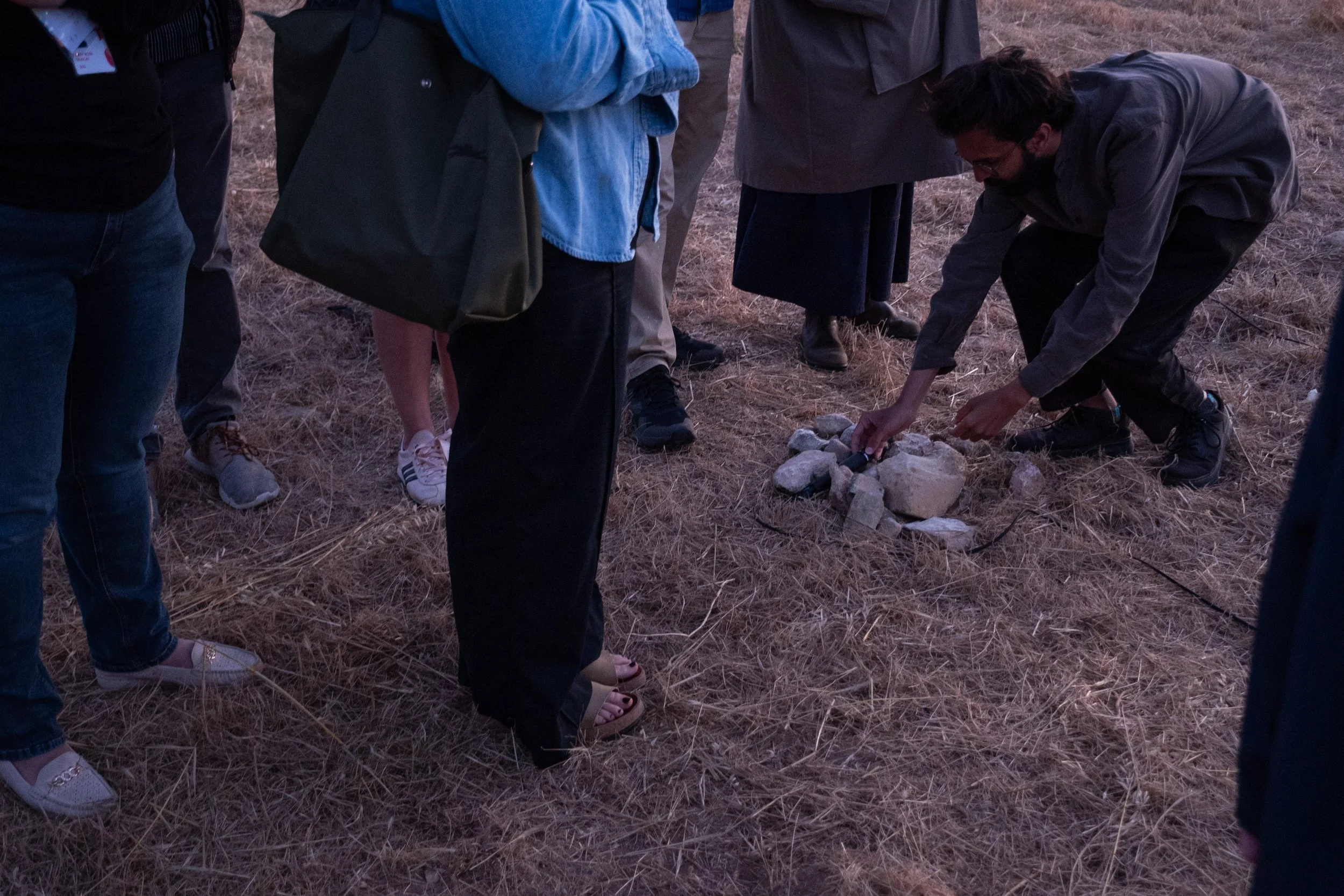
Sonic Sediments was curated and performed at the Malta Biennale 2026.
Sonic Sediments is a research-based sonic performance unfolding across the quarries and layered heritage of Malta. Within these terrains, inheritance and oblivion intertwine, forming a palimpsest where prehistoric devotion and modern industry coexist, revealing the tensions between sacred excavation and capitalist extraction.
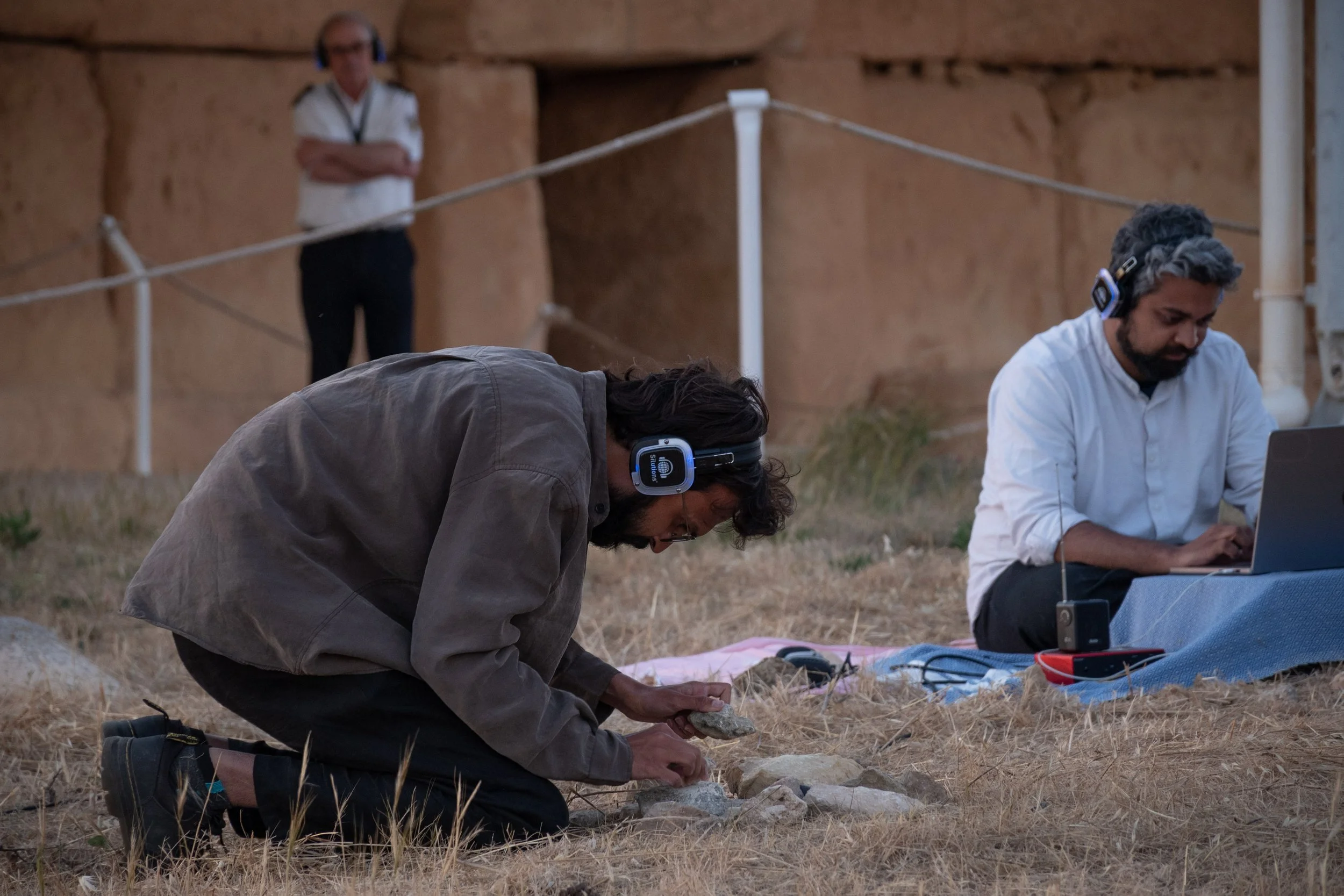
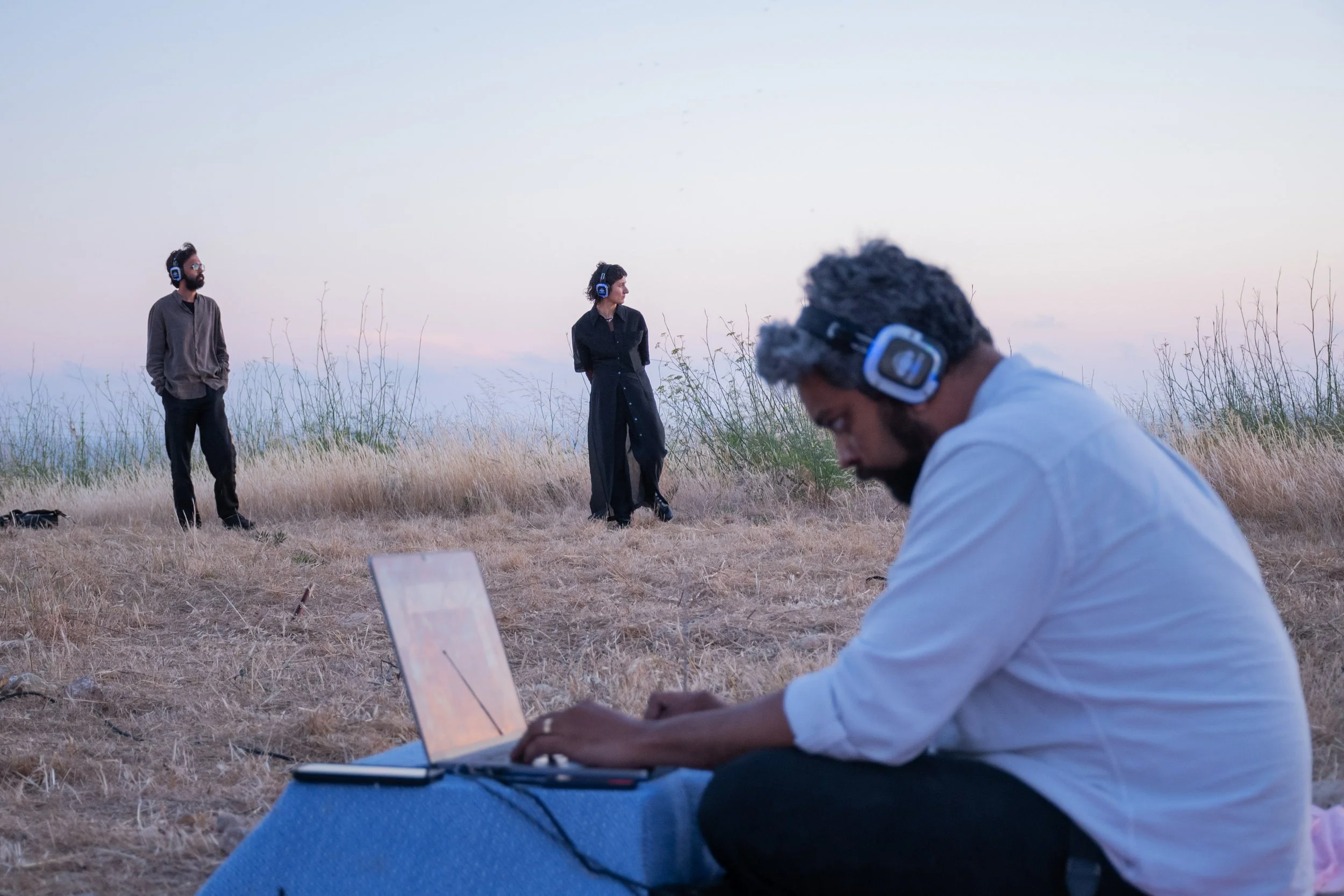
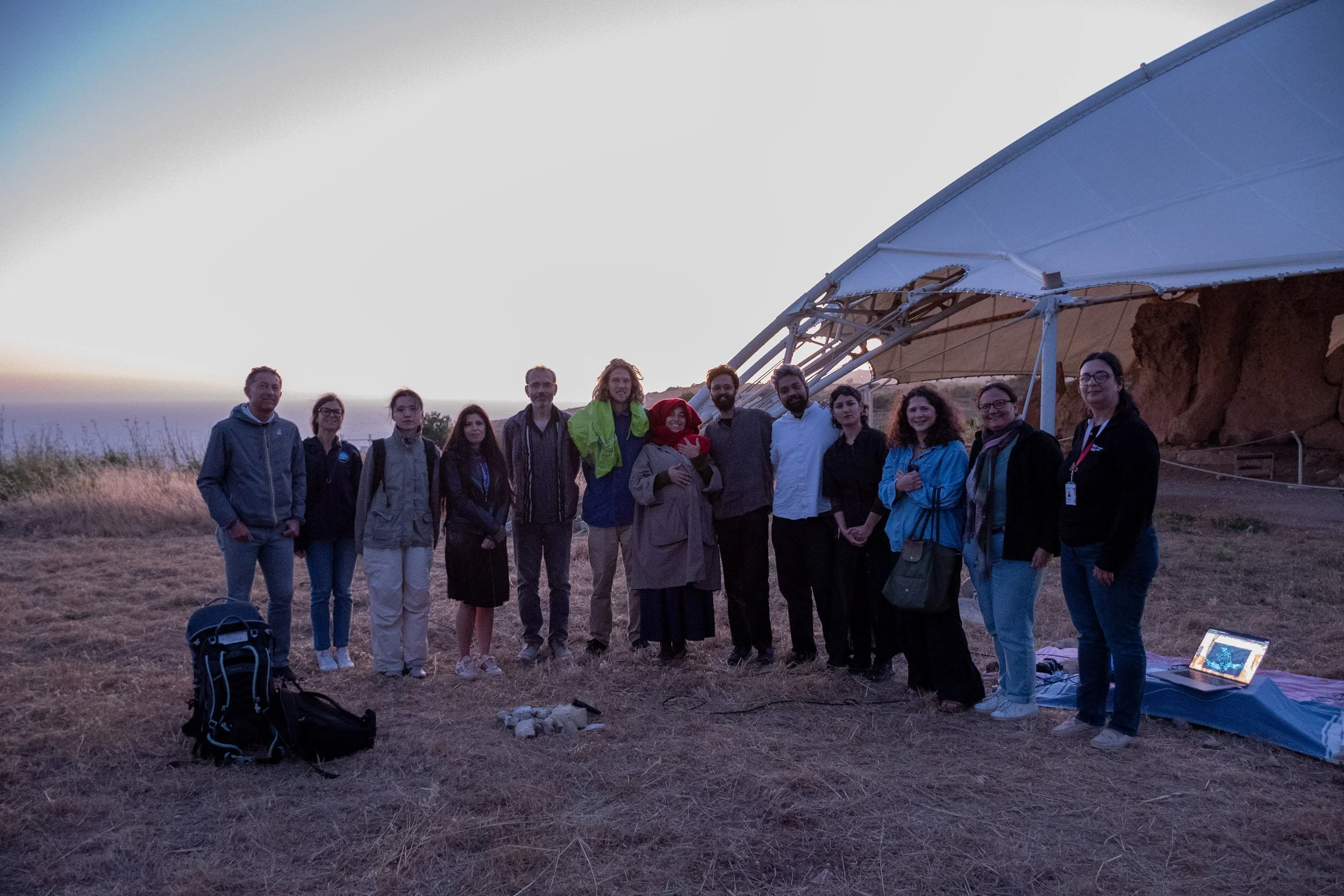
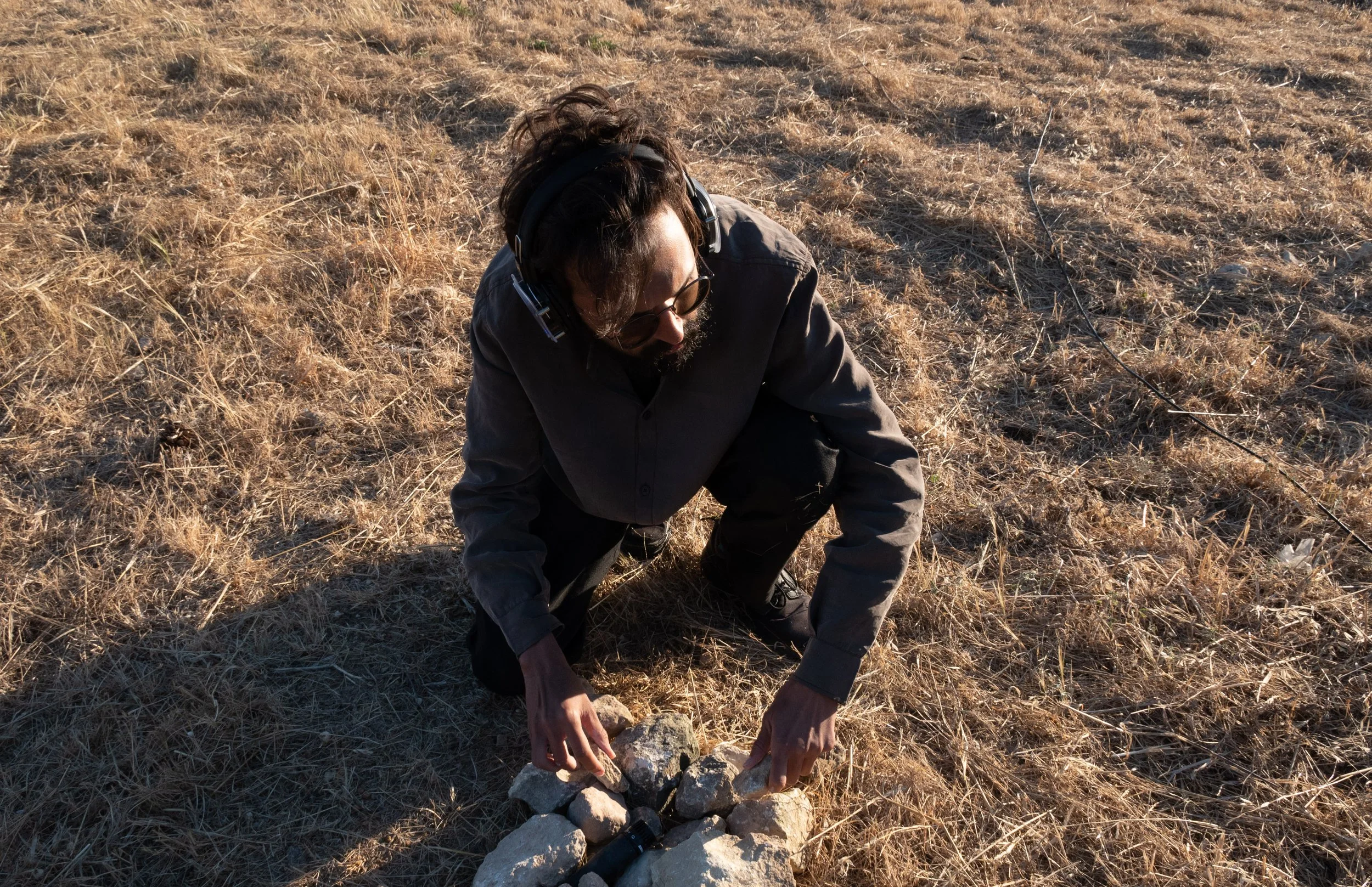
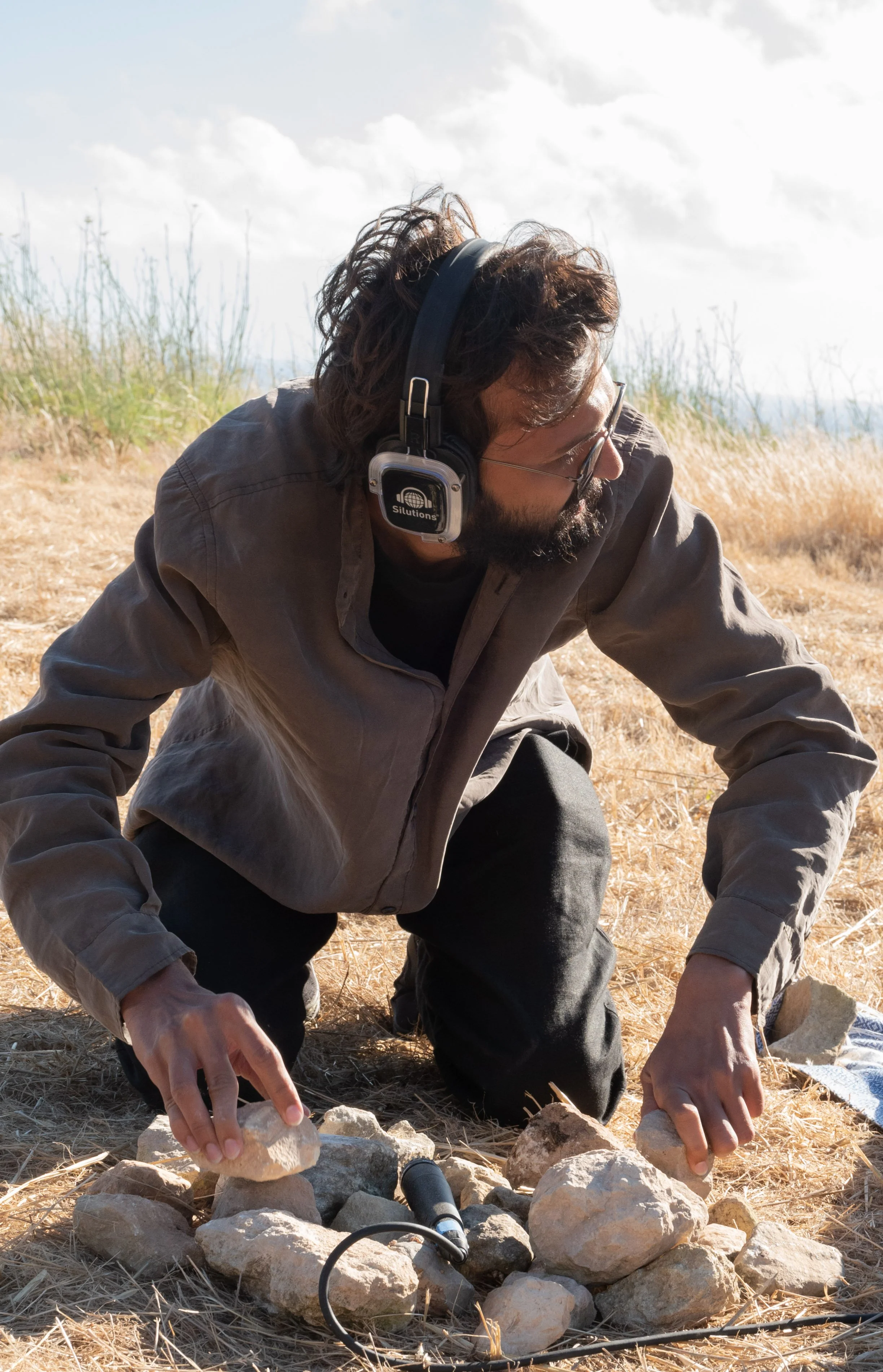
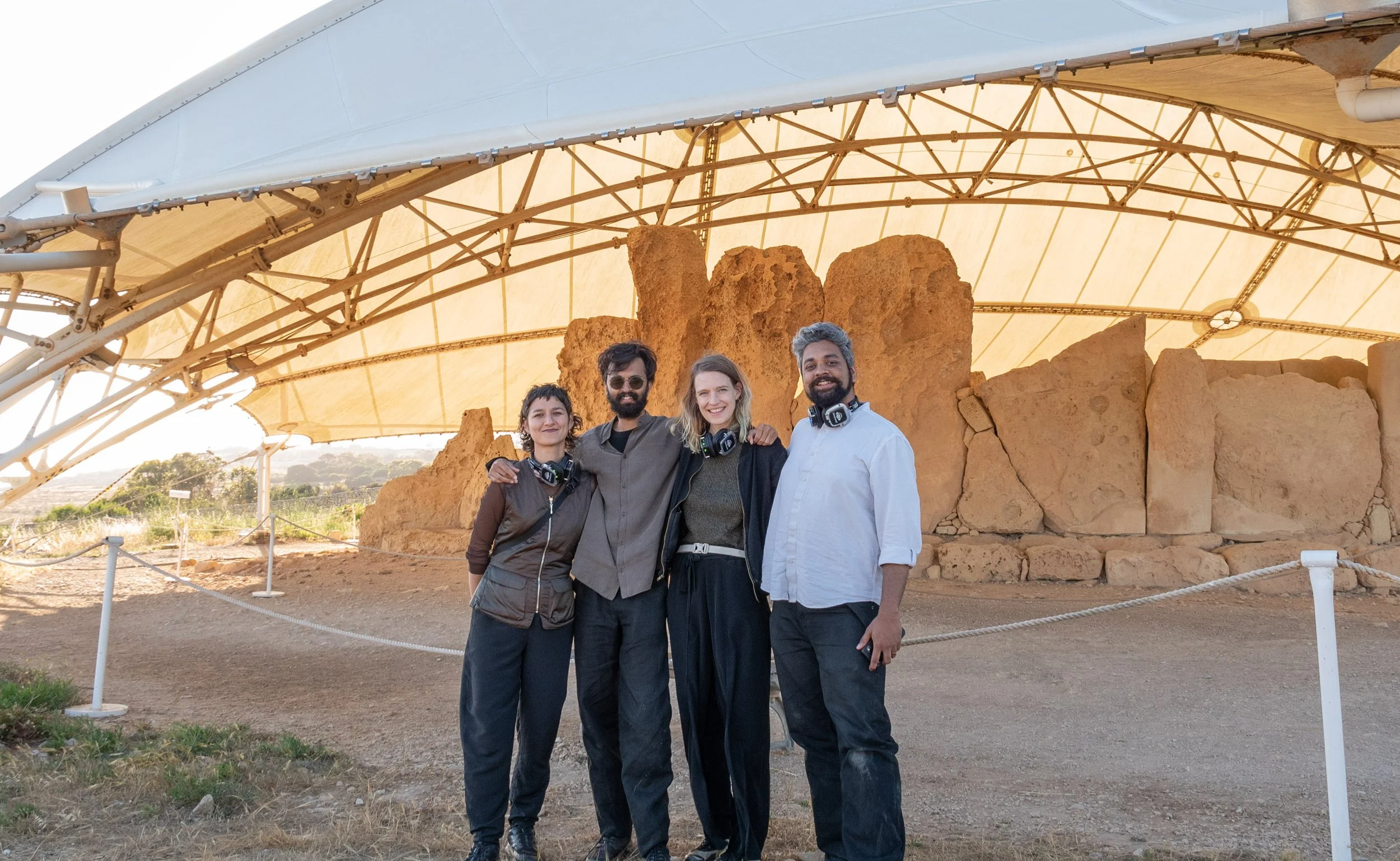
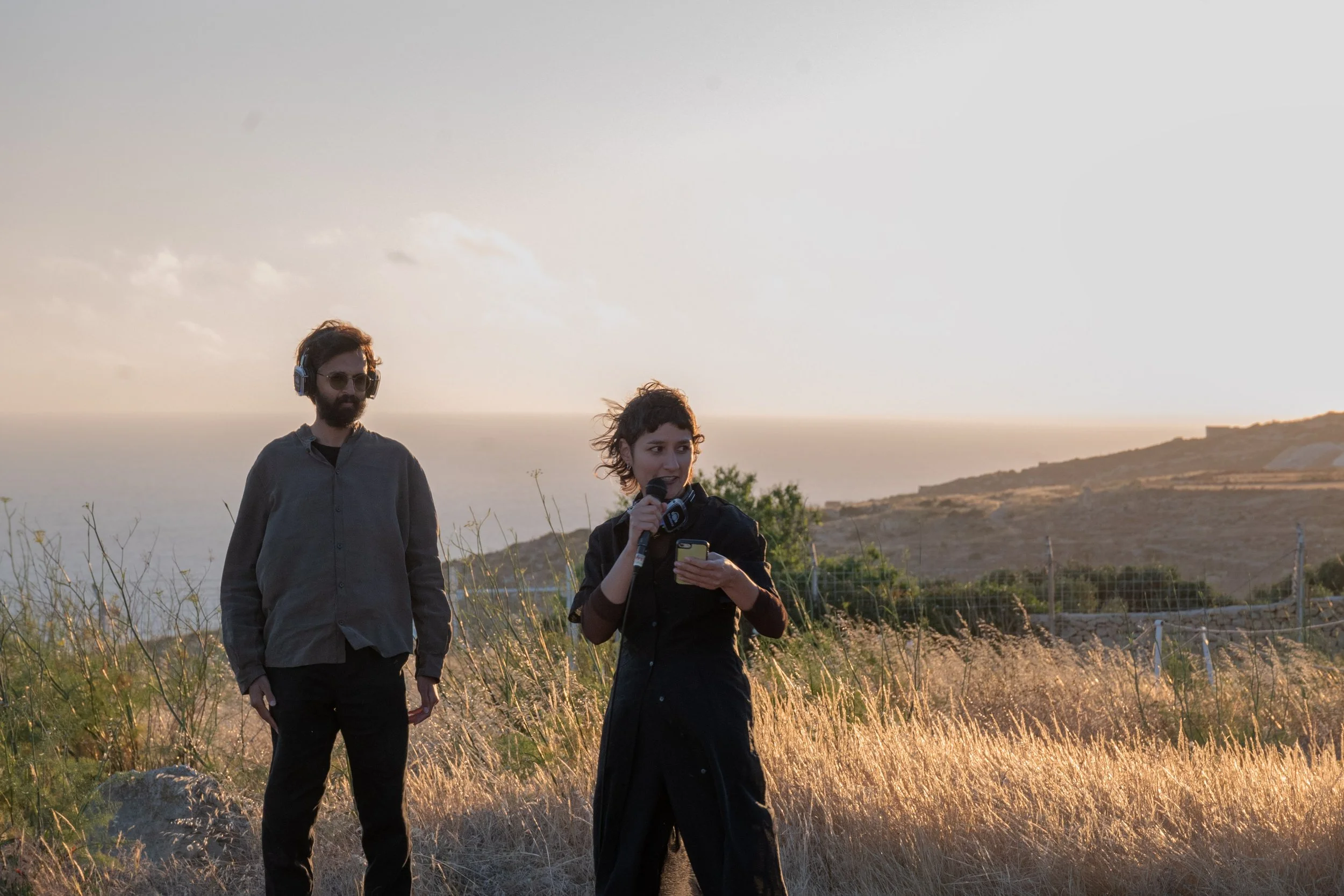
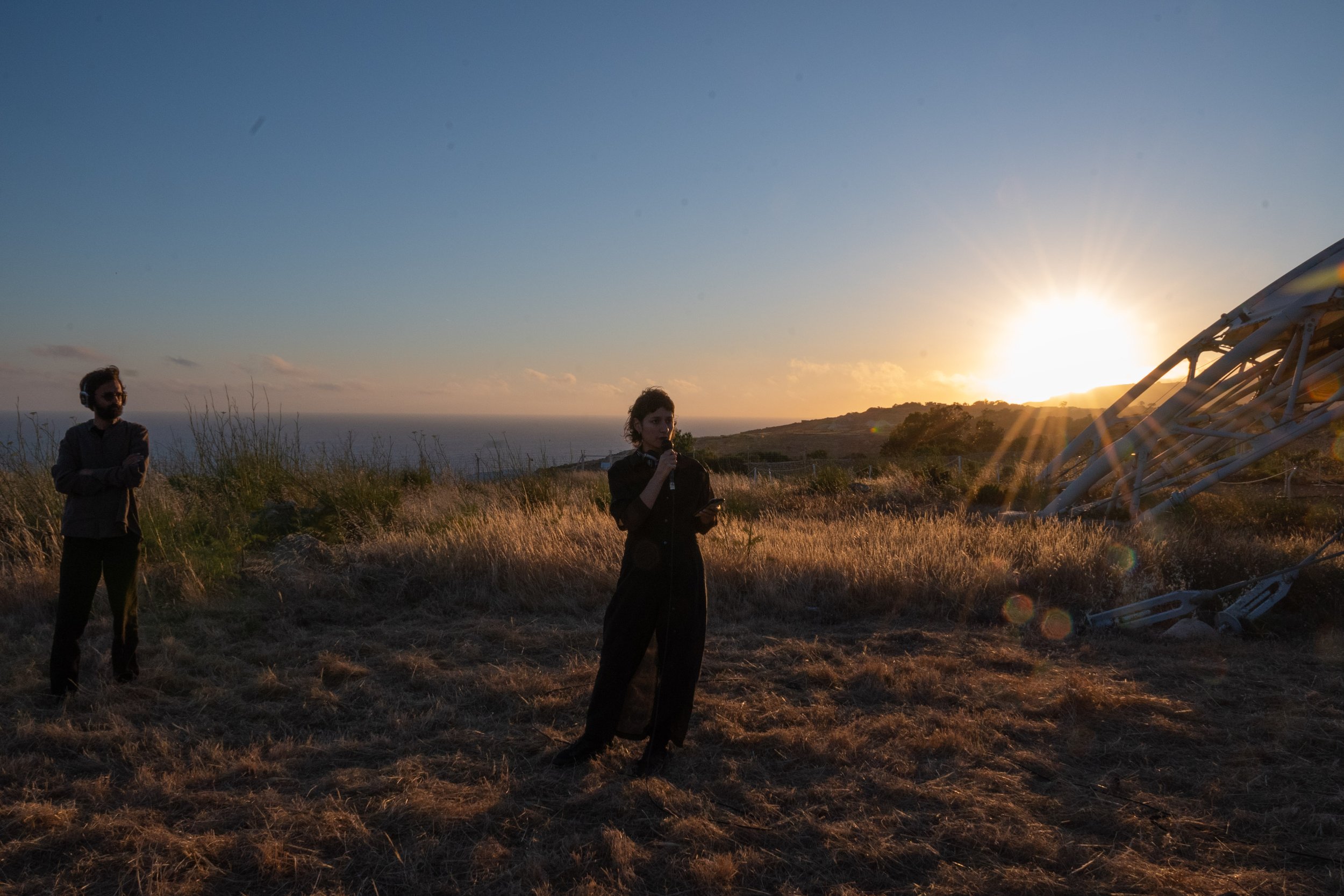
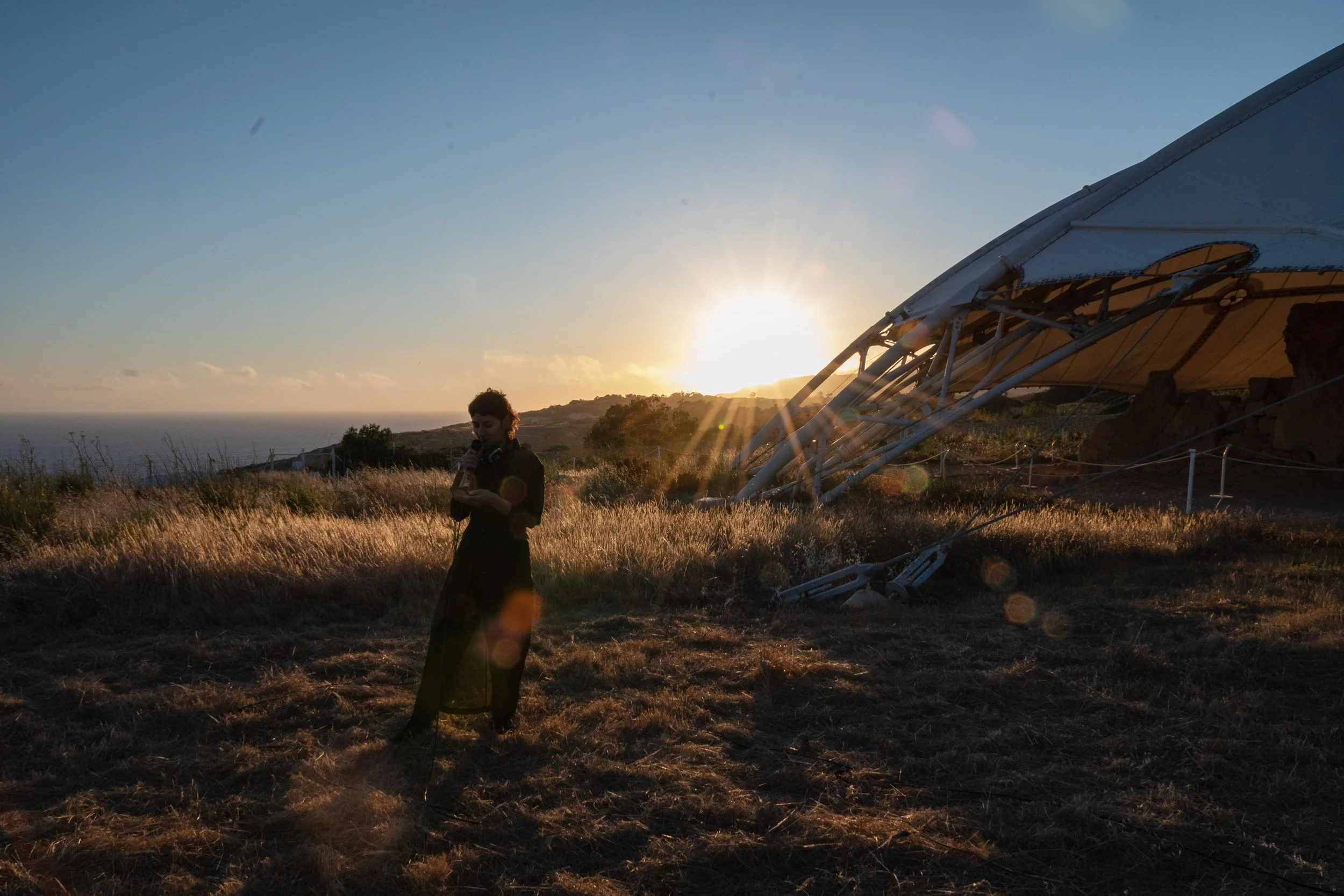
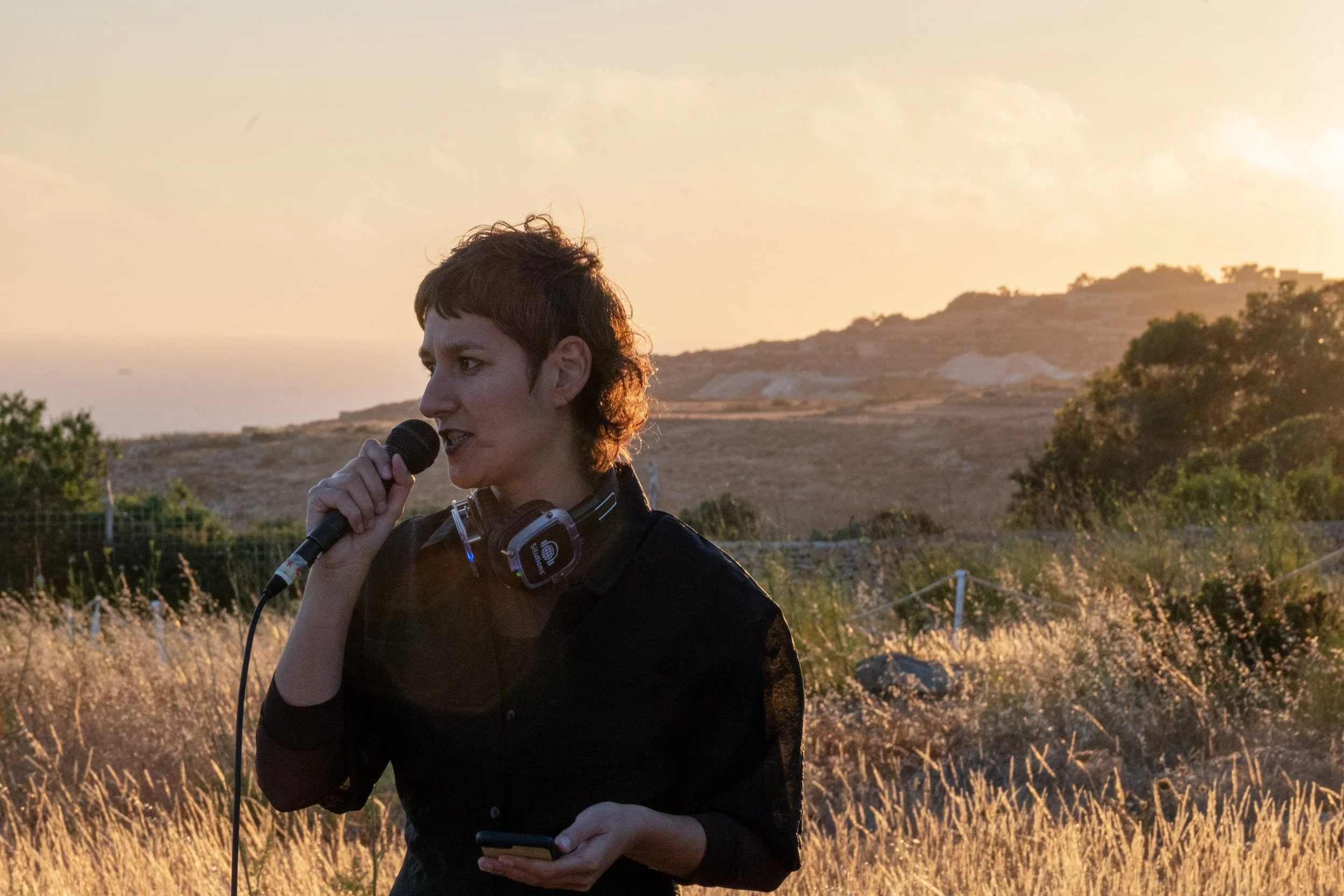
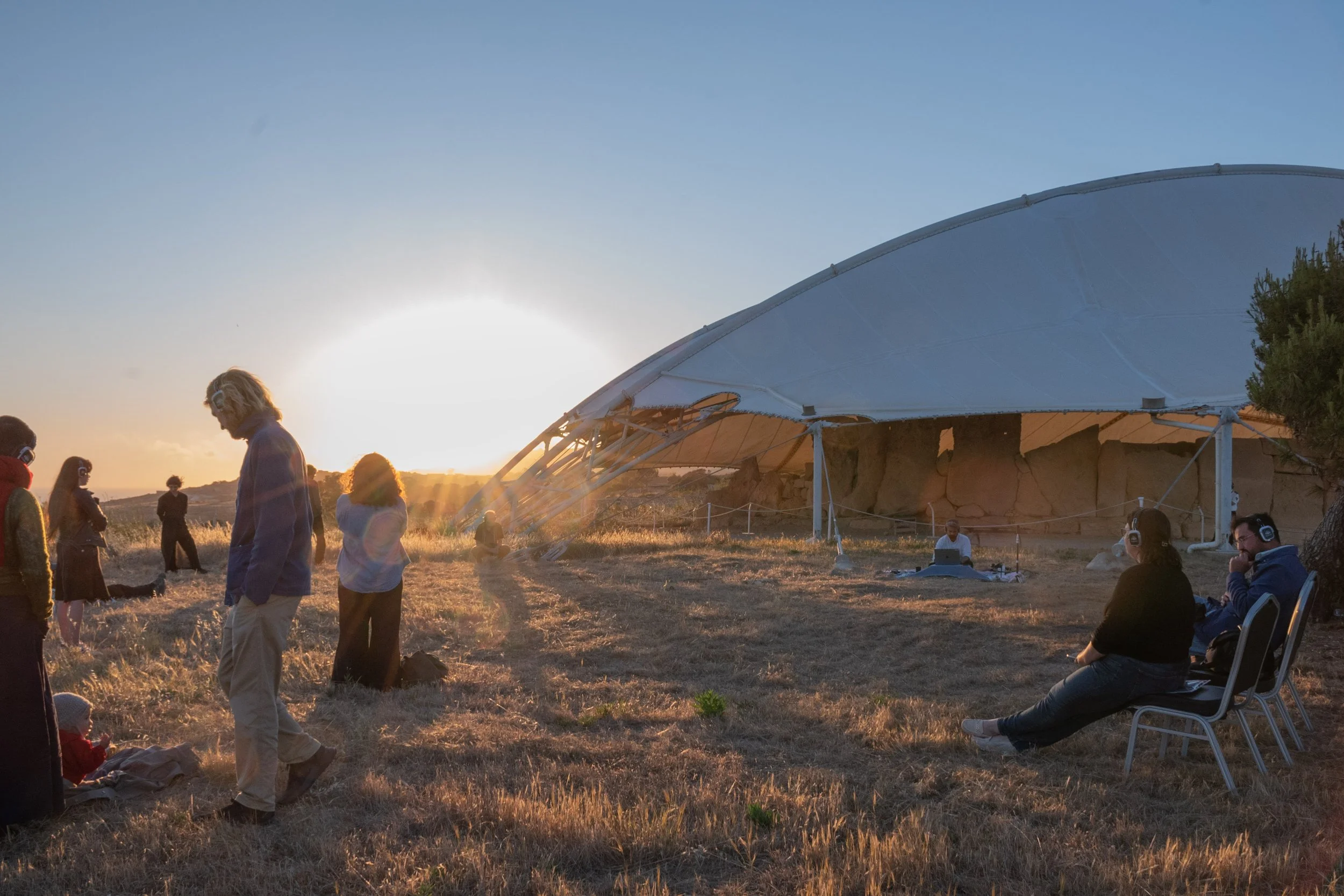
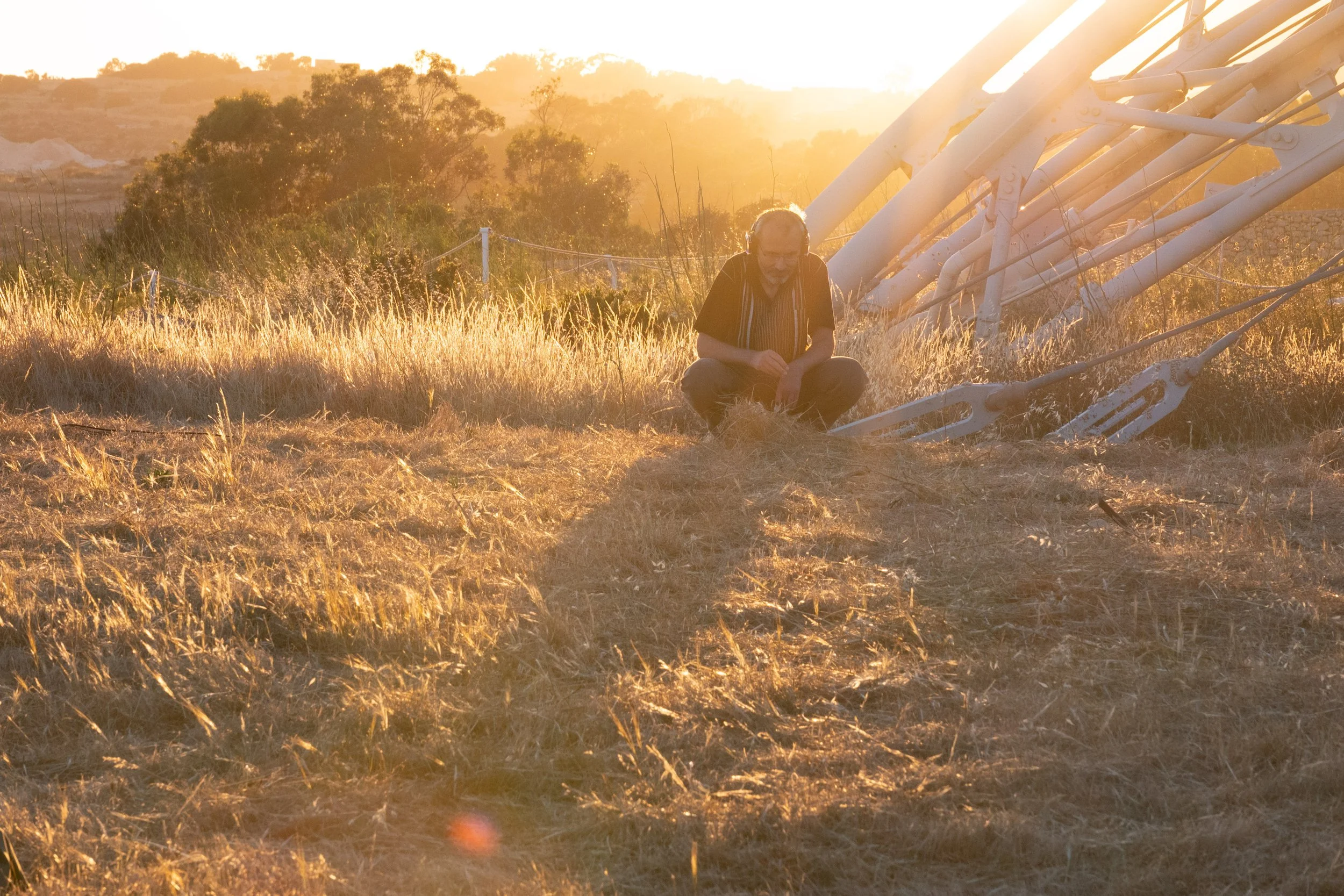
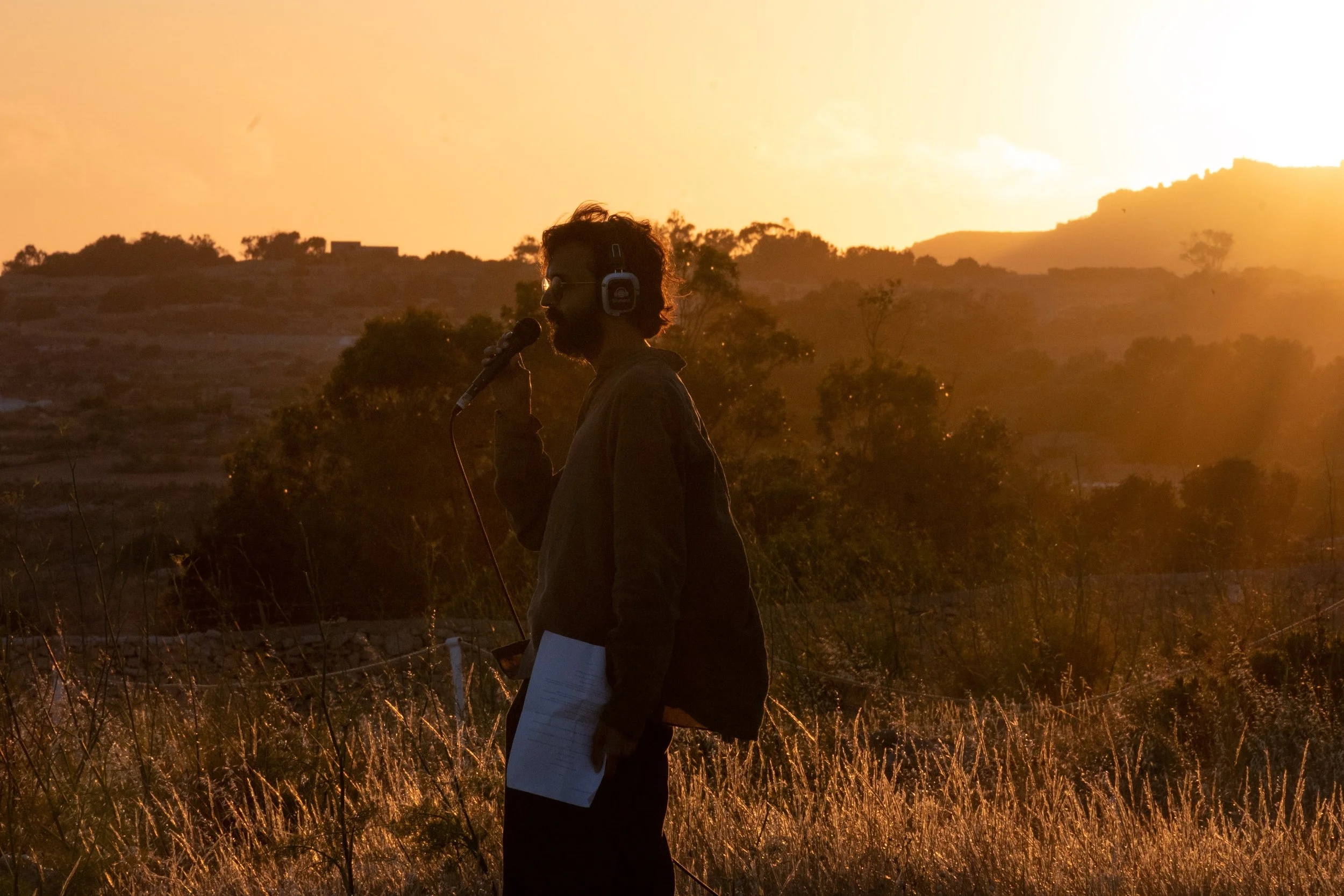
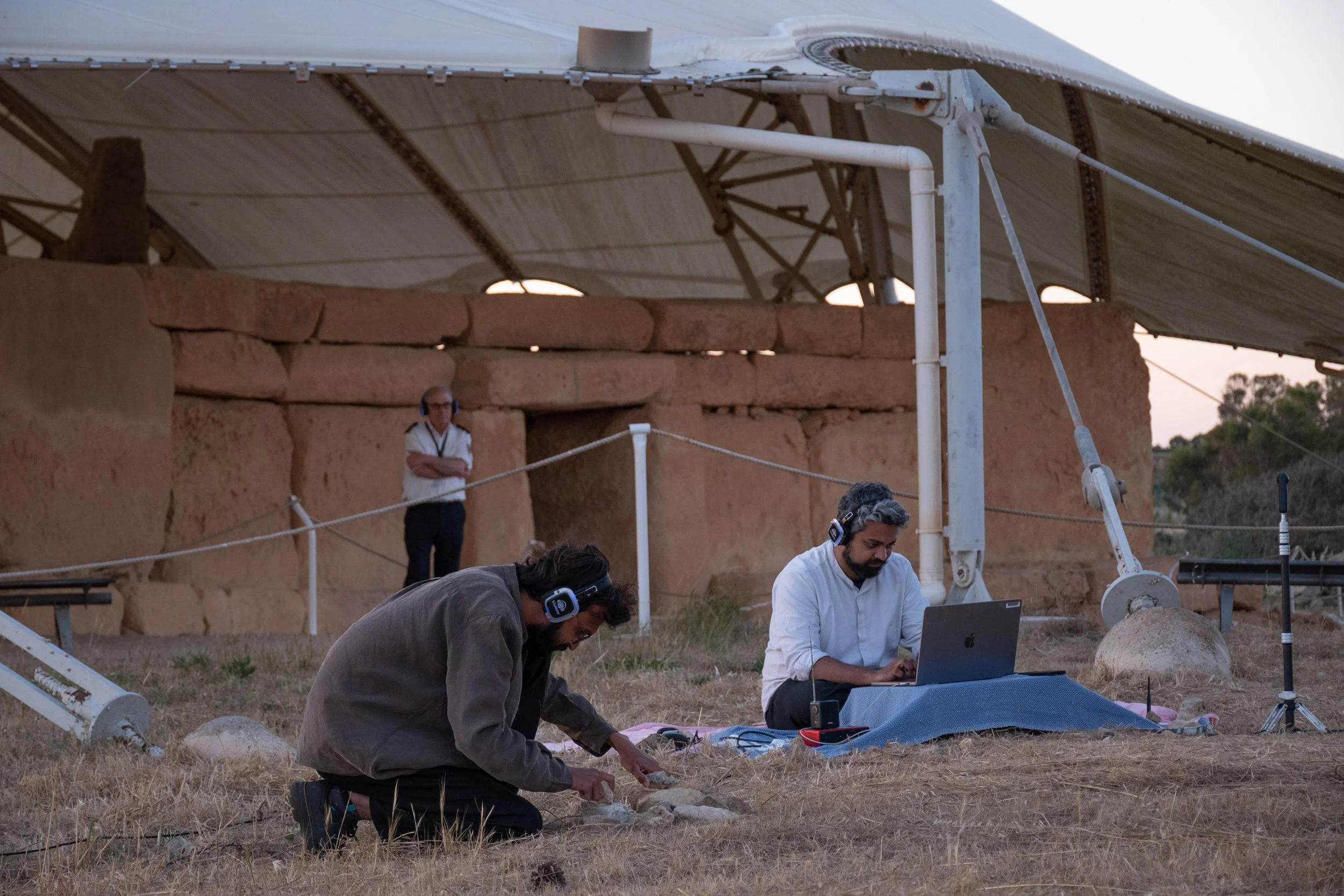
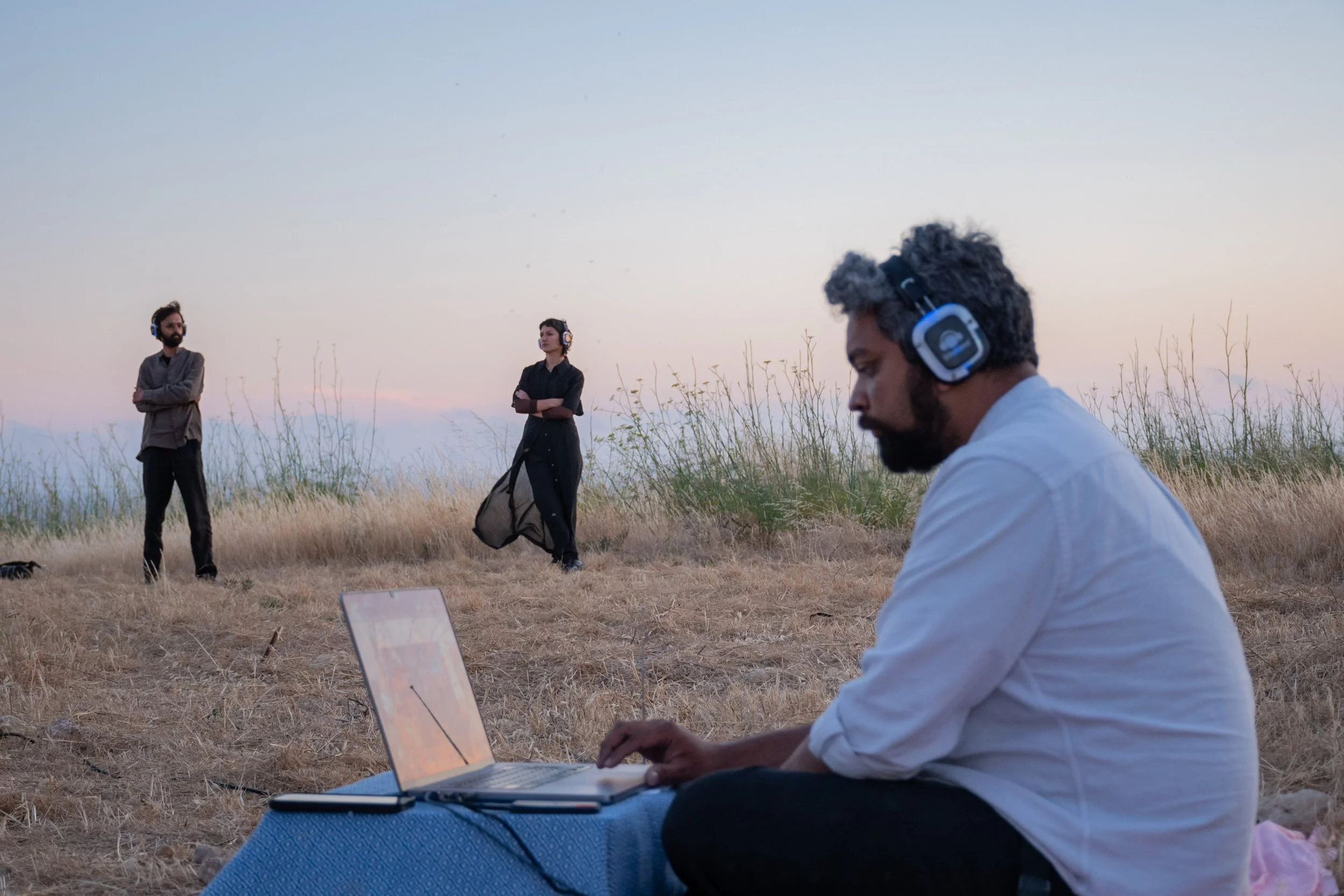
Composed of field recordings, archival fragments, oral histories, and spontaneous conversations and encounters, the project takes the form of an experimental sonic composition dispersed throughout the everyday spaces of the Biennale before culminating in a collective listening performance at the UNESCO World Heritage Site of Ħaġar Qim on May 20, 2026.
Democratic life today is increasingly mediated by collective distrust, algorithmic governance, artificial intelligence, migration, ecological crisis, and informational fragmentation. The imaginaries that once sustained public life - visibility, dialogue, representation, and shared reason - are increasingly under strain. Public experience is encountered less through coherent narratives than through atmospheres, interruptions, competing truths, and partial forms of knowledge.
In this moment of polycrisis, we propose listening as a political and epistemological act. Drawing from Sonic Sediments, we argue that sonic research offers alternative ways of assembling collective life - through attention rather than representation, and through improvisation rather than consensus. Rather than seeking clarity or resolution, listening creates the conditions for inhabiting ambiguity, negotiating differences, and cultivating forms of collective life that remains open, provisional, and multiple.
Sonic Sediments

Curation and Conception: Pravah Khandekar and Carolina Sepúlveda
Sound and Media Artist: Manaswi Mishra
Research and Field Recordings: Eli Börnicke and Carolina Sepúlveda
Video and Photography: Eli Börnicke
Graphic Identity and Design: Weichi He
This project is completed with the generous support of the European Union, Heritage Malta, the Goethe-Institut, Opera of the Future at MIT Media Lab (Boston, United States), Ħaġar Qim Archeological Site, and the Malta Biennale.



Listening as Humility
Contemporary life has shifted from the promises of futurity toward fragmented media ecologies shaped by presentism, algorithmic mediation and competing facts and figments. Through the processes of composition and performance, Sonic Sediments proposes listening as an act of humility. Drawing from Dipesh Chakrabarty’s proposition, humility is not understood as passivity but as an openness to worlds that exceed our knowledge, our categories, and our capacity for control. Listening asks us to remain with uncertainty rather than immediately resolve it. It becomes a political practice capable of sustaining collective attention without requiring consensus, certainty, or fixed identities and position.
Listening as Archive
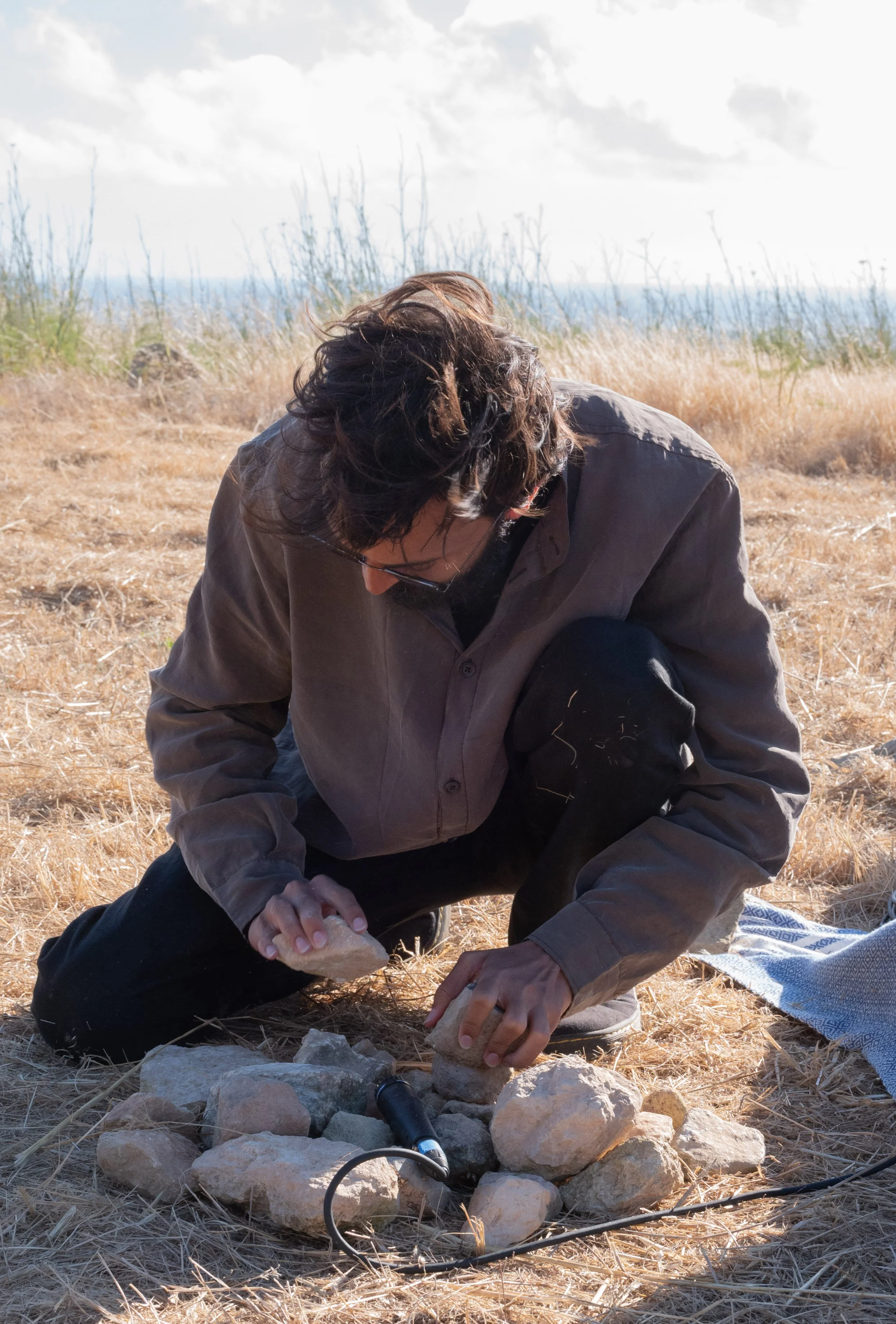
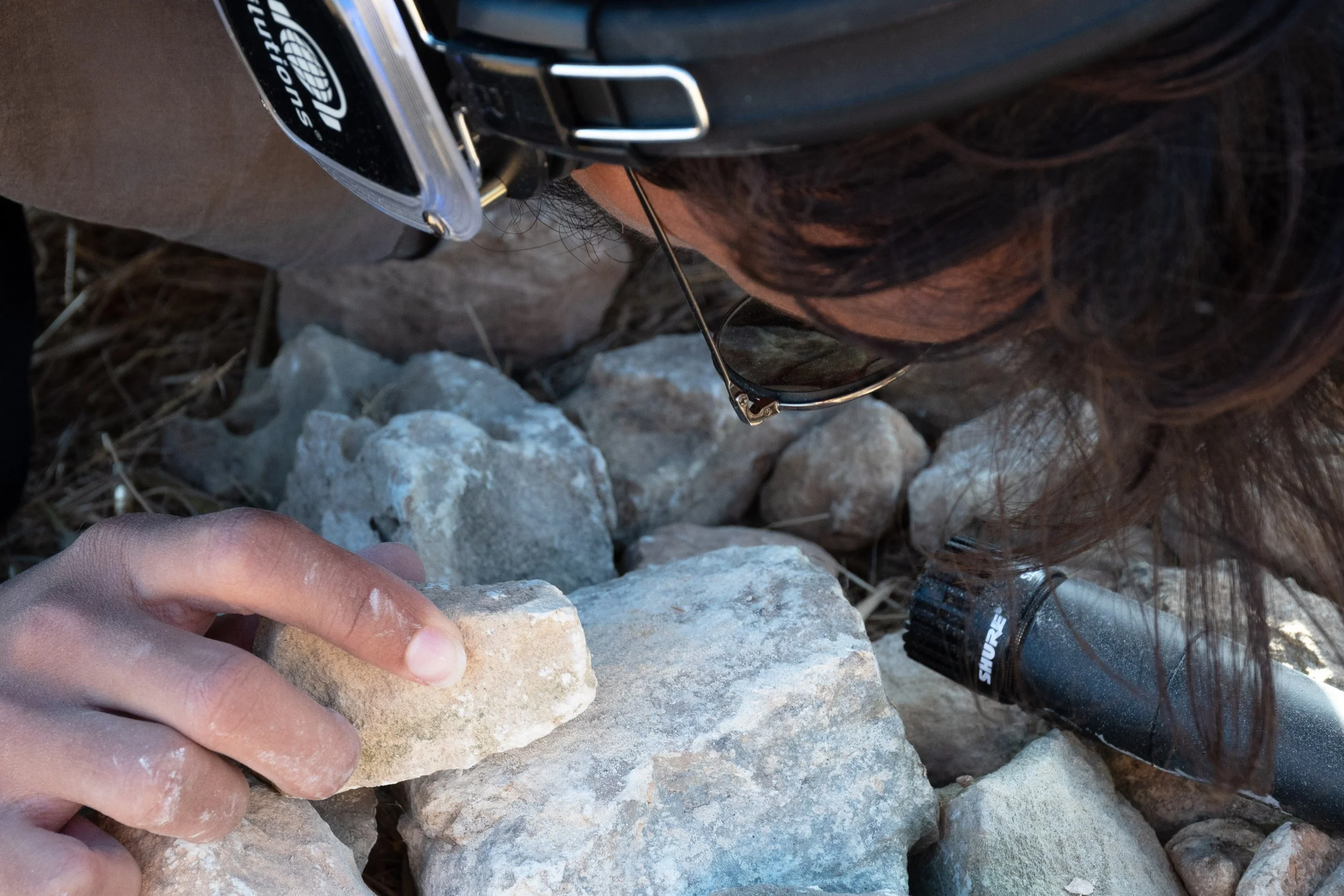
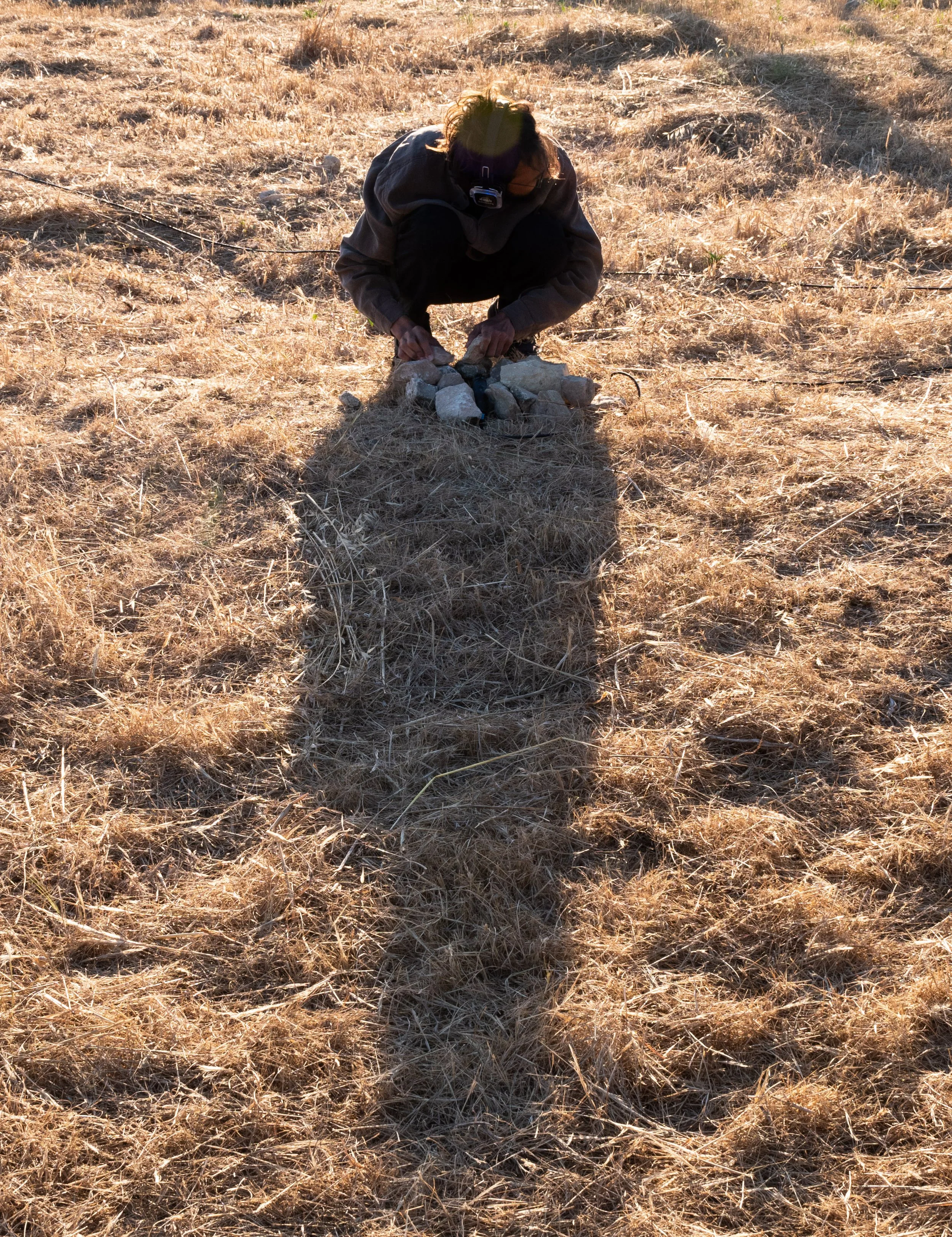
Working across Malta's limestone quarries, the project explores forms of history that exceed institutional archives. Through sound, the quarries emerge as live repositories of subterranean culture, labour, migration, geological memory, everyday encounters, and unfinished political histories. Sonic research allows these layered temporalities to coexist, resisting singular truths and narratives. Field recordings, conversations, archival fragments, and environmental sound are assembled live as competing yet simultaneous voices and their interference. The work proposes an archive that remains incomplete, contingent, and polyphonic.
Listening as Multiplicity
Developed in collaboration with the Opera of the future MIT Media Lab, the works brings together human improvisation alongside artificial intelligence modelling, environmental sensing, spatial sound, and acousmatic listening environments, investigating new forms of collective composition, listening and inquiry.
Human voices, environmental processes, experimental percussion, machine learning systems, archival recordings, and live improvisation continually reshape one another, generating a sonic environment that remains unfinished and responsive to its surroundings. We play with uncertainty, responsiveness, and experimentation, replacing fixed authorship, representation, and predetermined outcomes.